EN
EN

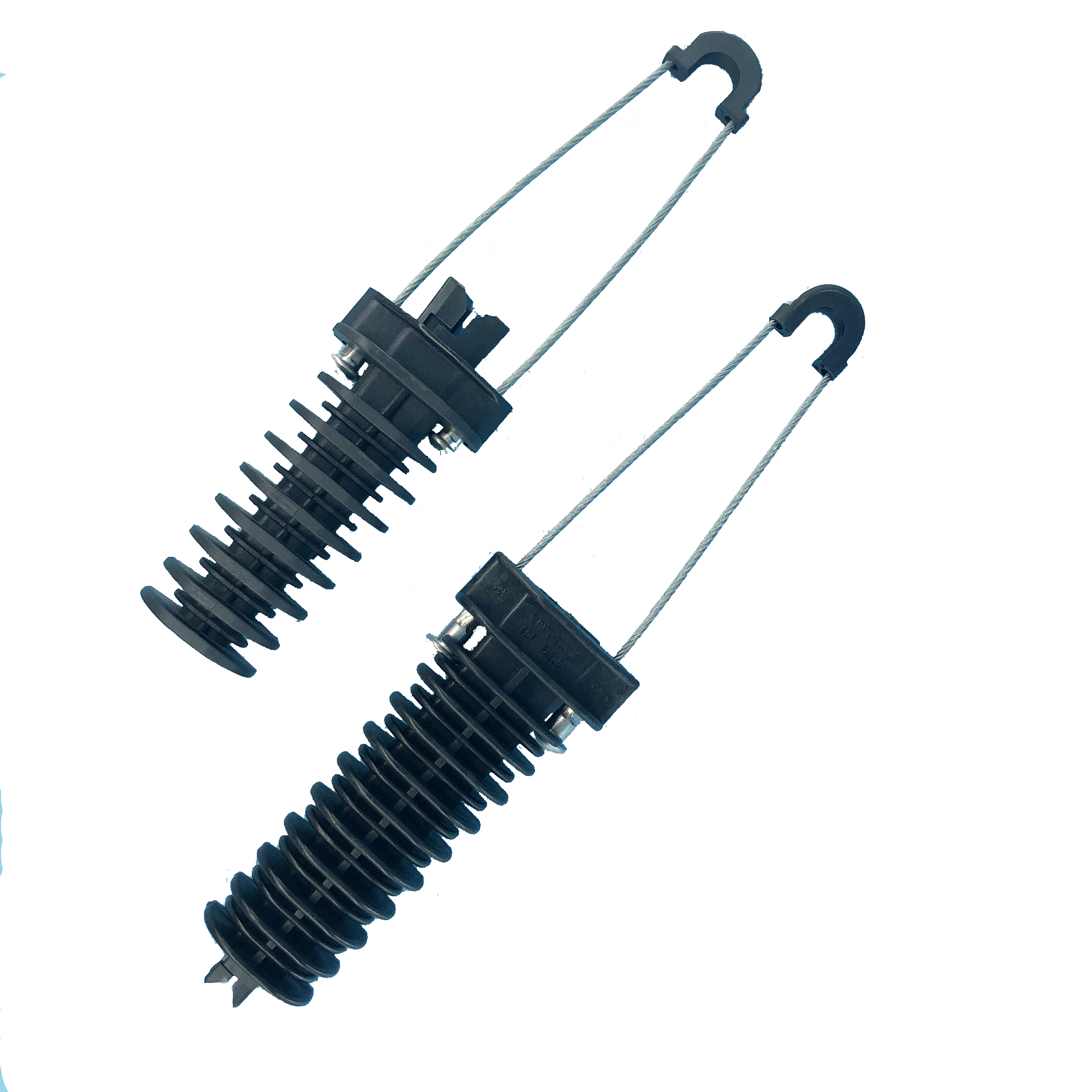
Understanding Dead End Clamp Types and Core Applications
Wedge-Type vs. Bolt-Type Dead End Clamps: Mechanical Principles Compared
Wedge type dead end clamps work with this neat self tightening system where as the tension goes up, the wedge just keeps pushing further into the clamp body. The result? Grip strength that hits over 90% of what the conductor can handle according to IEC 61284 standards. Bolt type clamps are different though they need specific torque settings to create even pressure across the connection. These tend to be the go to option when regular checks or maintenance is part of the plan. Some recent research from 2023 showed interesting results too. Wedge types actually performed about 15% better when dealing with those unpredictable wind forces we see in mountain areas. Meanwhile most folks still stick with bolts in city sub stations because they're easier to get at and tweak when needed.
Insulated and High-Voltage Dead End Clamps for Modern Grid Applications
The latest insulated dead end clamps feature cross linked polyethylene or XLPE barriers capable of handling voltages up to 35 kV. This makes them particularly effective against flashovers in coastal environments where salt spray is constantly present. For high voltage applications, manufacturers have started applying aluminum zinc alloy coatings that cut down on galvanic corrosion problems by around 40% when compared with older materials according to industry standards from IEEE 1510-2022. Another recent advancement includes built in vibration damping sleeves which significantly extend equipment lifespan. Field tests show these components can last anywhere between 8 to 12 additional years in areas affected by those annoying wind induced vibrations known as Aeolian effects.
Specialized Designs: NY, Straight Line, Loop, ADSS, and OPGW Variants
Specialized dead end clamps meet distinct infrastructure demands:
- NY (Nylon) clamps: Non-conductive solutions ideal for secondary distribution lines
- ADSS (All-Dielectric Self-Supporting) clamps: Secure fiber-optic cables without metallic components, preventing signal interference
- OPGW (Optical Ground Wire) clamps: Combine mechanical support for overhead ground wires with secure retention of internal fiber strands
A comparative field study of anchor clamp mechanics showed these specialized variants reduce installation time by 25% in complex grid configurations.
Material Composition: Aluminum Alloy, Galvanized Steel, and Ductile Iron in Practice
| Material | Tensile Strength | Corrosion Resistance | Weight Efficiency |
|---|---|---|---|
| Aluminum Alloy | 160-220 MPa | High (Coastal Use) | 8.2/10 |
| Galvanized Steel | 340-550 MPa | Moderate | 6.5/10 |
| Ductile Iron | 420-600 MPa | Low | 4.8/10 |
Galvanized steel remains the choice for high-tension applications exceeding 20 kN, while aluminum alloys are used in 95% of urban distribution projects thanks to their favorable 2.3:1 strength-to-weight ratio. Advances in zinc-nickel coatings have tripled maintenance intervals in industrial environments (ASTM B633-23).
Evaluating Mechanical Strength and Tensile Load Requirements
Tensile Strength and Performance Under Wind, Ice, and Dynamic Loads
Dead end clamps must endure extreme environmental conditions, including 90 mph winds and 1-inch radial ice buildup. Material selection directly influences performance under such stresses:
| Material | Tensile Strength (MPa) | Fatigue Resistance | Optimal Use Case |
|---|---|---|---|
| Aluminum Alloy | 200-300 | Moderate | Lightweight distribution lines |
| Galvanized Steel | 400-550 | High | Ice-prone regions |
| Ductile Iron | 500-700 | Extreme | High-voltage transmission |
Galvanized steel retains 95% of its tensile integrity after 1,000 hours of salt spray exposure, confirming its suitability for coastal installations. In mountainous zones, ductile iron clamps exhibit less than 1% deformation under combined wind and ice loads equivalent to 28 kN/m².
Testing Standards: Slip Test and Ultimate Tensile Strength Verification (IEC, ASTM)
The IEC 61284 slip test requires clamps to prevent conductor movement at 120% of maximum design tension for 60 minutes. ASTM F1554-23 governs ultimate tensile strength (UTS) verification using the formula:
F = At× St
Where:
- At = Effective tensile area (mm²)
- St = Material strength (MPa)
For instance, a steel clamp with 400 MPa strength and a 50 mm² tensile area delivers 20 kN capacity—adequate for most 33 kV systems.
Load Capacity Matching for ACSR, AAC, AAAC, and Copper Conductors
Correct load alignment is critical to avoid failure:
- ACSR conductors: Require clamps rated 20–30% above the conductor’s RTS to account for stress concentration
- Copper/AAC lines: Demand galvanically compatible materials to prevent bimetallic corrosion
- AAAC cables: Perform best with pre-stretched aluminum clamps aligned to their 0.2% proof stress
For 150 mm² AAAC conductors, a 22-25 kN clamp ensures safety during thermal contraction at -20°C.
Ensuring Conductor Compatibility and Proper Clamping Range
Matching Dead End Clamps to Conductor Size and Material (Aluminum, Copper, ABC)
Getting the right match between clamps and conductors matters a lot in practice. When working with aluminum instead of copper, installers need clamps that offer about 20% more surface area because aluminum expands more when heated up to around 40 degrees Celsius, roughly 2.3 millimeters per meter. In ABC systems specifically, good clamps should hold onto both the outer insulation layer and the actual conducting core without causing any damage to either part. A recent report from EPRI back in 2023 showed something interesting too: nearly one out of five clamp failures happens right at installation due to these material mismatches. This problem gets even worse along coastlines where salt air mixes with stainless steel hardware touching aluminum components, speeding up corrosion issues that nobody wants to deal with down the road.
Clamping Range Flexibility Across Multi-Strand and Compact Conductors
As compact conductors with denser stranding (between 12 to 45 percent tighter packing) become more common alongside multi-strand options, today's clamps need to handle a diameter range with about plus or minus 1.5 mm tolerance. According to recent tests from TÜV Rheinland in 2024, adjustable jaw clamps actually save around 32 percent on installation time compared to those fixed size models. What's really impressive is they still manage to keep almost all the strength intact, holding at 99.4 percent tensile retention according to IEC 61238 standards. When dealing with hybrid installations though, nothing beats modular clamping systems. Their segmented construction makes all the difference when working with mixed material conductors such as aluminum clad steel, where regular clamps would just end up damaging the strands.
Assessing Environmental Resistance and Long-Term Durability
Corrosion, Moisture, and UV Resistance in Coastal and Industrial Zones
Dead end clamps installed along coastlines and near industrial sites deal with constant exposure to salt spray, acidic rainfall, and damaging ultraviolet light. Tests show aluminum alloy clamps coated with galvanization can resist corrosion at around 98.5 percent effectiveness during salt fog exposure according to ASTM B117 standards. Meanwhile, ductile iron holds up well structurally even when humidity stays above ninety percent for extended periods. Insulated clamps treated with UV stabilized polymer coatings last approximately thirty percent longer in those hot, moist areas where sunlight beats down all day long. Field data from several recent studies indicates that simply selecting materials appropriate for their surroundings cuts down how often these components need replacing by nearly sixty percent in locations subjected to extreme stress factors.
Material Selection for Extended Service Life Under Environmental Stress
Steel clamps treated with galvanization typically have a lifespan between 50 to 75 years when used in industrial areas where pH levels range from 4 to 9. When manufacturers apply aluminum zinc alloy coatings instead, these components can function effectively even in more extreme conditions ranging from pH 3 down to 11. Ductile iron offers another advantage for certain applications because it resists fatigue pretty well, with at least 350 MPa tensile strength. Plus, its graphite microstructure actually helps stop cracks from spreading in areas that experience frequent temperature changes. Many newer models now come equipped with special silicone seals that repel water, which makes a big difference since most clamp failures happen inside due to corrosion. Statistics show this internal corrosion accounts for around 83% of all failures in places with high humidity.
Verifying Compliance with Industry Standards and Installation Efficiency
IEC, IEEE, ASTM, and NF Standards for Electrical and Mechanical Safety
Compliance with international standards ensures mechanical reliability and electrical safety. Key benchmarks include IEC 61284 (overhead line fittings), IEEE 524 (vibration control), and ASTM F855 (grounding specifications). IEC-certified clamps show less than 5% slippage during ASTM F1558-22 tests under combined ice and wind loads (¥25 kN).
| Standard | Focus Area | Key Requirement |
|---|---|---|
| IEC 61284 | Overhead line fittings | Mechanical strength under dynamic loads |
| IEEE 524 | Vibration dampening | Fatigue resistance (10⁷+ cycles at 35 Hz) |
| ASTM F1558 | Slip resistance | ≤3% conductor slippage at 60% rated load |
Third-party certifications like ISO 9001 confirm consistent manufacturing quality, while NF C 33-312 testing validates arc resistance in high-voltage applications.
Certification as a Benchmark for Quality and Field Reliability
Certifications from UL or Intertek serve as strong indicators of field performance. ANSI C119.4-certified clamps maintain 98.6% grip efficiency after 5,000 thermal cycles, outperforming non-certified units (89.2%). This reliability translates into lifecycle cost savings of up to $18k per clamp over ten years.
Ease of Installation and Maintenance Implications for Utility Teams
Clamps equipped with pre-torqued hardware and visual wear indicators reduce average installation time by 43% (NREL 2022). Ergonomic features such as spring-assisted compression jaws, color-coded size markers, and standardized torque settings enable first-time success rates above 97%, minimizing rework in tight utility spaces.
Frequently Asked Questions
What is the purpose of a dead end clamp?
Dead end clamps are used to secure both ends of a conductor in overhead and underground installations, providing mechanical support and maintaining electrical conductivity.
What are wedge-type dead end clamps?
Wedge-type dead end clamps utilize a self-tightening mechanism that increases grip strength as tension rises, making them effective in high-tension scenarios.
How do aluminum zinc alloy coatings benefit high-voltage applications?
Aluminum zinc alloy coatings significantly reduce galvanic corrosion, thereby enhancing the durability of clamps in high-voltage environments.
Can dead end clamps withstand extreme weather conditions?
Yes, dead end clamps are designed to endure harsh environmental factors like high winds, ice buildup, and variations in temperature, depending on the material composition.
Table of Contents
- Understanding Dead End Clamp Types and Core Applications
- Evaluating Mechanical Strength and Tensile Load Requirements
- Ensuring Conductor Compatibility and Proper Clamping Range
- Assessing Environmental Resistance and Long-Term Durability
- Verifying Compliance with Industry Standards and Installation Efficiency
- Frequently Asked Questions