EN
EN
Understanding the Function and Importance of Suspension Clamps
Key Roles of Suspension Clamps in Overhead Power and ADSS Fiber Optic Installations
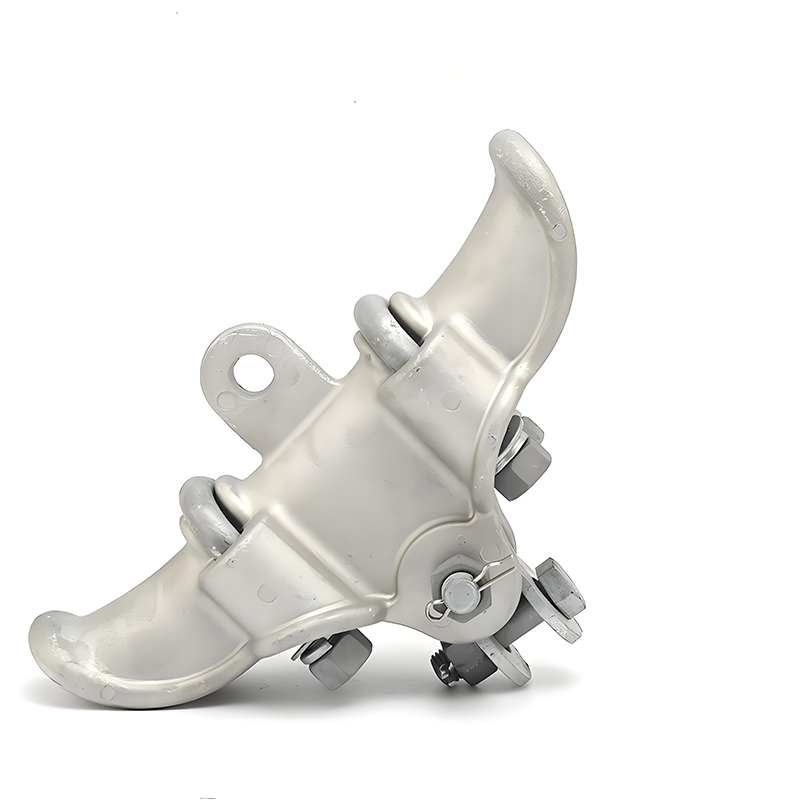
Suspension clamps play a really important role when it comes to keeping things stable in those overhead power line setups and also in ADSS fiber optic systems. These devices actually hold the cables right in the middle of the span, which lets them move naturally with factors like wind blowing around, temperatures going up and down, or even when there's ice building up on them. Now this is different from strain clamps that basically lock everything down at both ends. The suspension type works better because they spread out all those moving forces along the entire length of the cable span. Industry data suggests this approach can cut down on conductor wear and tear by somewhere around 35-40% in areas where vibrations are a big concern for infrastructure maintenance.
Key Functions of Suspension Clamps vs. Strain Clamps
| Aspect | Suspension Clamps | Strain Clamps |
|---|---|---|
| Primary Purpose | Support cables mid-span | Anchor cables at endpoints |
| Stress Handling | Distribute dynamic loads | Absorb static tension |
| Movement Allowance | Permits thermal expansion/contraction | Fixed, no movement |
How Suspension Clamps Support Cable Integrity Under Operational Loads
Suspension clamps work by distributing pressure evenly across support points, which stops those pesky stress spots from forming. They basically hold conductors in place using those familiar U or C shapes that won't scratch up the insulation or damage delicate fiber strands inside. Some newer versions come equipped with special armor grips designed specifically for places where winds can really pick up speed, sometimes going past 90 miles per hour without any issues. These features make all the difference when it comes to preventing disaster scenarios like sagging lines or completely snapped cables. And let's face it nobody wants to deal with power outages caused by failed equipment. According to recent studies from Ponemon Institute back in 2023, each major outage typically sets companies back around $740,000 dollars give or take depending on location and severity.
Critical Performance Requirements for Reliable Aerial Cable Suspension Systems
High-performance suspension clamps must meet three core criteria:
- Load Capacity: Withstand tensile forces ≥10 kN for medium-voltage applications (IEC 61284 standards).
- Corrosion Resistance: Utilize galvanic coatings or stainless steel construction suitable for 30+ years in coastal or industrial settings.
- UV Stability: Maintain 90% material integrity after 15,000 hours of accelerated UV exposure (ASTM G154).
Modern designs also incorporate fail-safe features like secondary locking bolts to prevent detachment during seismic events or heavy ice accumulation.
Routine Inspection: Identifying Wear, Damage, and Structural Issues
Inspecting clamp bodies, bolts, and attachment points for signs of fatigue or loosening
Regular visual inspections should identify cracks, corrosion, or deformation in clamp components. Torque checks are vital, as vibration and wind can loosen fasteners over time. Focus on high-stress areas such as grooves and hinge joints where fatigue is most likely to develop.
Assessing cable tension and alignment to prevent stress concentration
Improper tension leads to premature clamp wear. Use calibrated tension meters to ensure load distribution aligns with manufacturer specifications. Misaligned cables create uneven pressure, potentially deforming internal parts or weakening armor grips in fiber optic systems.
Frequency and checklist for effective suspension clamp inspections
In high-load zones—especially coastal or industrial areas—a quarterly inspection schedule is recommended. Key items include:
- Surface cracks >1 mm depth (requires immediate replacement)
- Corrosion covering more than 15% of clamp surface area
- Bolt torque deviation beyond ±10% of initial value
According to a 2023 Structural Maintenance Study, standardized checklists reduce failure rates by 62% in environments with extreme temperature fluctuations. Always perform post-event inspections following severe weather or seismic activity.
Protecting Suspension Clamps from Corrosion and Environmental Stress
Common Environmental Stressors: Wind, Ice, Thermal Expansion, and Moisture Exposure
Suspension clamps deal with all sorts of environmental problems. Wind can hit them at speeds exceeding 60 miles per hour, while ice buildup adds around four pounds per foot of extra weight. Plus there are those annual temperature changes that make materials expand and contract by about three percent each year. All these stresses lead to metal getting tired and developing tiny cracks, especially where bolts connect different parts. Out in deserts, the difference in how much aluminum and steel expand when heated causes components to rub against each other more than they should, speeding up wear and tear. Coastal areas bring their own issues too. Salt from sea spray mixes with moisture in the air to create corrosive stuff on surfaces. Galvanized steel doesn't last nearly as long near the ocean as it does inland according to a recent study from Utility Durability Report back in 2023.
Corrosion Prevention Techniques for Suspension Clamps in Coastal and Industrial Areas
When dealing with tough environmental conditions, there are several things that can be done ahead of time. For starters, applying marine grade silicone sealant around those tricky threads and corners helps keep moisture out. Cleaning everything down once a year using neutral pH cleaners gets rid of harmful chlorides that build up over time. Coastal tower installations really benefit from switching to 304 stainless steel suspension clamps too these last about five years longer without showing signs of rust compared to regular galvanized options. Industrial areas present different challenges altogether. Nickel plated hardware stands up better against sulfur dioxide pollution, and armor grips lined with elastomers create a barrier against acid rain getting into sensitive components. These small changes make a big difference in extending equipment life spans.
Evaluating Material Resistance to UV Degradation and Chemical Exposure
Material selection significantly influences performance and maintenance frequency:
| Material | UV Resistance | Chemical Resistance | Ideal Environment |
|---|---|---|---|
| Aluminum Alloy | Moderate | Poor | Dry, low-pollution areas |
| Hot-Dip Galvanized Steel | High | Moderate | Temperate regions |
| AISI 316 Stainless | Excellent | Excellent | Coastal/industrial zones |
Stainless steel clamps show <0.1mm/year corrosion rates under continuous UV exposure, outperforming polymer-coated variants that degrade above 140°F. Near refineries, anodized aluminum provides strong resistance to hydrocarbon exposure without sacrificing tensile strength.
Material Selection and Its Impact on Suspension Clamp Longevity
Comparison of Aluminum Alloy, Galvanized Steel, and Stainless Steel in Suspension Clamp Construction
What material gets chosen has a big impact on how well something resists corrosion, what kind of strength it has, and basically how long it will last before needing replacement. Take aluminum alloy 6061-T6 for instance. It's pretty light weight and costs less money upfront. According to some research published in the 2024 study on overhead line components, these aluminum parts need about 85 percent less maintenance work when installed near coastlines where salt air is constantly attacking materials. But there are situations where galvanized steel still wins out. The steel can handle much higher tension forces because its tensile strength reaches around 550 MPa while aluminum only hits about 310 MPa. That makes steel the go-to option for those tight installations of ADSS fiber optics under heavy loads. And then there's stainless steel grade 316 which really shines in places with lots of moisture and harsh chemicals floating around. Industrial facilities report seeing their replacement schedules drop by roughly 40% after switching to this type of steel.
How Material Choice Affects Maintenance Frequency and Durability in Different Climates
Aluminum works really well in dry areas or high mountain environments because it can handle temperatures from -40 degrees Celsius all the way up to 150 degrees without cracking from heat stress. When we look at coastal installations though, stainless steel is clearly better than regular galvanized coatings. The PREN value for good quality stainless is around 35 or higher, whereas galvanized stuff starts breaking down much quicker when exposed to salt air. Salt spray causes galvanized materials to corrode about three times faster than stainless alternatives. Many engineers now prefer hybrid solutions where they combine aluminum parts with stainless steel fasteners. These mixed designs tend to last anywhere between 15 and 20 extra years in normal climate zones based on what corrosion experts have modeled over recent decades.
Design Considerations for Armor Grip and Fiber Optic Suspension Clamps Under Continuous Load
Materials exposed to constant movement from things like wind vibrations need to withstand fatigue stresses above about 200 MPa. When it comes to armor grips, stainless steel options spread out stress across their surface roughly 25 percent better than the galvanized alternatives. This matters a lot for ADSS cables since they can only handle strains up to around half a percent before failing. Looking at high voltage transmission lines, aluminum remains popular despite its lower conductivity compared to copper. At about 35% of International Annealed Copper Standard performance, aluminum still manages to cut down on those pesky inductive losses while keeping everything sturdy enough to hold up under forces reaching 200 kilonewtons.
Best Practices for Maintenance, Replacement, and Installation
Step-by-step maintenance procedures for extending suspension clamp service life
It's important to check clamp bodies, bolts, and where things attach at least twice a year. When checking bolts, make sure they're tightened properly with good quality wrenches. A recent study found that around one in four problems with aerial system clamps happens because bolts weren't tight enough (Energy Infrastructure Report 2023). For areas that tend to rust easily, clean them carefully without scratching the surface. Apply some dielectric grease on threads too since this helps keep water out. Don't forget to write down all tension measurements taken during inspections. These records can show if loads are changing slowly over time and might need fixing before bigger issues develop.
When and how to replace damaged or worn suspension components
Clamps need replacing right away if we spot any hairline cracks during inspection checks, if there's deformation beyond about 2% of what they originally measured, or when galvanic corrosion covers more than roughly 15% of their surface area. For ADSS systems specifically, it's important to get new ones in when the armor grip sleeves start showing signs of polymer cracking or when the grooves wear down past around 1.5 mm deep. These issues tend to cause those pesky microbend losses that can creep up by as much as 0.8 dB per kilometer according to some recent research on fiber optic reliability back in 2023. When swapping out old clamps, make sure to go with replacements that have similar mechanical strength ratings and are made from the same materials as the originals. Getting this right helps keep the whole system working reliably without unexpected failures down the road.
Proper installation techniques to ensure optimal performance and safety
Before putting those suspension clamps on, it's smart practice to pre-tension the cables at around 20% of their max load capacity. This helps spread out the stress evenly across the entire system. When positioning the clamps, they need to be perfectly perpendicular to where the cable runs. Get out that laser level! Even a small misalignment beyond 3 degrees can really take a toll on equipment lifespan, particularly along coastlines where corrosion already causes problems. We've seen wear rates jump up nearly 40% from just that little angle issue. For fiber optic installations specifically, always check against aerial standards regarding bend radii, especially close to those splice cases where things get tight. And don't forget to double check everything with properly calibrated dynamometers at the end of the day. The readings should stay pretty much right on target, no more than plus or minus 10% off what was originally specified in the plans.
Selecting the right suspension clamp based on environmental and mechanical requirements
When dealing with coastal installations, it makes sense to go with either stainless steel or those special duplex-coated aluminum clamps that can withstand salt spray testing for over 1,000 hours straight. For areas where there's a lot of vibration happening in industrial settings, look for clamp models that come with built-in damping pads. These actually cut down on those annoying harmonic vibrations by around two thirds according to some recent studies from last year's Vibration Mitigation Analysis report. Getting the right fit is crucial too. The armor grip should match the cable diameter pretty closely, ideally within half a millimeter plus or minus. If the grip is too big, cables tend to slip when temperatures fluctuate throughout the day, which nobody wants to deal with.
FAQ Section
What is the primary function of suspension clamps?
Suspension clamps are used to support cables mid-span, allowing them to move with environmental factors like wind and temperature changes, preventing stress concentration.
How do suspension clamps differ from strain clamps?
Suspension clamps allow movement and distribute dynamic loads, while strain clamps anchor cables at endpoints, absorbing static tension and preventing movement.
Why are corrosion-resistant materials important for suspension clamps?
Corrosion-resistant materials like stainless steel are crucial in coastal and industrial areas to prevent environmental damage, ensuring long-lasting clamp durability.
How often should suspension clamps be inspected?
In high-load zones, a quarterly inspection schedule is recommended to identify wear, damage, or structural issues, particularly following severe weather events.
Table of Contents
- Understanding the Function and Importance of Suspension Clamps
- Routine Inspection: Identifying Wear, Damage, and Structural Issues
- Protecting Suspension Clamps from Corrosion and Environmental Stress
- Material Selection and Its Impact on Suspension Clamp Longevity
-
Best Practices for Maintenance, Replacement, and Installation
- Step-by-step maintenance procedures for extending suspension clamp service life
- When and how to replace damaged or worn suspension components
- Proper installation techniques to ensure optimal performance and safety
- Selecting the right suspension clamp based on environmental and mechanical requirements
- FAQ Section