EN
EN

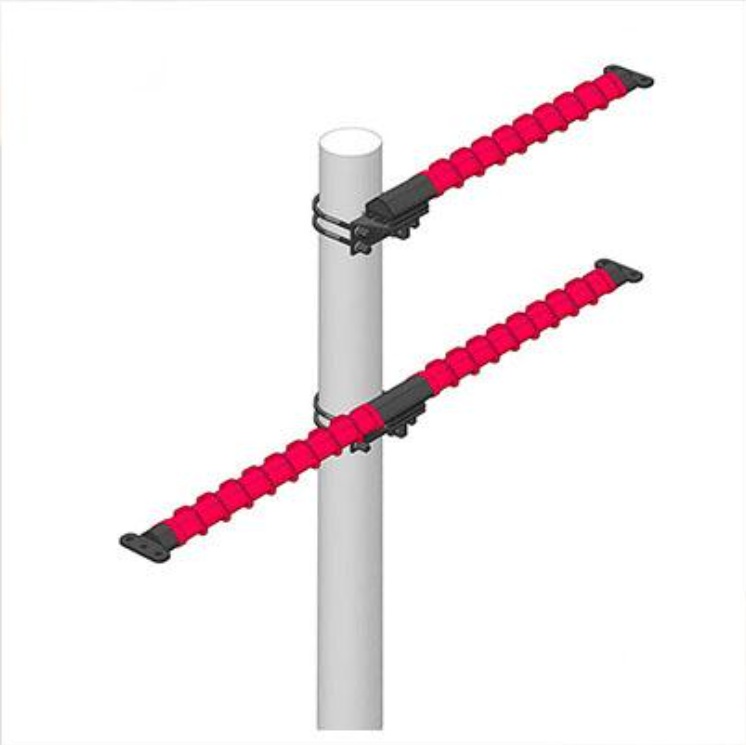
The Structural Role of Crossarms in Wind Load Resistance
Structural function of crossarms in transmission towers
The crossarm is basically what holds everything together on those big transmission towers. These components support all the power lines and have to stand up against sideways wind forces without failing. When they're bolted firmly to the main tower structure, this helps keep the wires from swinging around too much and ensures there's enough space between them for safety reasons when storms blow through. The shape matters a lot too. Wider arms spread out the weight better across the structure, which is good, but they also catch more wind, creating extra stress points. That's why engineers spend so much time figuring out just how wide versus how strong makes sense for each particular installation site conditions.
Material selection for high wind resistance: Steel, wood, and composites
Steel is still king when it comes to areas with strong winds because of how strong it is relative to its weight. It can handle gusts going over 150 miles per hour without breaking down. Wood might be cheaper upfront, but needs special treatments just to get around 70 to 80 percent of what steel can do against wind forces. That makes wood a less reliable option in really harsh conditions. Fiber reinforced plastic or FRP materials are becoming more popular though. These composites give similar strength to steel but weigh about 40 percent less. Plus they don't corrode easily which is why many people choose them for buildings near the coast where salt air would eat away at other materials over time.
Horizontal vs. vertical crossarm configurations under wind stress
Horizontal crossarms face 18–22% higher wind pressures than vertical designs, according to computational fluid dynamics modeling. While vertical arrangements reduce aerodynamic loading, they introduce complexity in conductor angle management. To optimize performance, modern systems use tapered profiles that lower drag coefficients by 30% without compromising standard insulator mounting interfaces.
Engineering Design Principles for Wind Load Management
Standards and Calculations for Design Wind Loads on Cantilever Crossarms
The design adheres to ASCE/SEI 7-22 standards, which are widely recognized as the go-to reference for structural load calculations. According to these guidelines, there needs to be at least a 1.5 safety margin when dealing with severe wind conditions. For areas prone to hurricanes or intense storms, crossarm structures need to withstand winds exceeding 100 miles per hour without failing. To check how well these components hold up over time, engineers run fatigue tests using something called finite element analysis (FEA). This process models what happens during those rare but powerful 50-year storm events and helps identify where stress builds up most dangerously. Recent research from 2023 into grid resilience showed that lattice style crossarms actually cut down wind pressure by around 18 percent compared to traditional solid designs simply because air flows better through them rather than getting trapped against solid surfaces.
| Load Type | Design Factor | Application Guidance |
|---|---|---|
| Ultimate Wind | 1.5 | 100-year storm gusts |
| Serviceability | 0.7 | Operational winds ¥55 mph |
| Fatigue | 2.0 | Cyclic storm loading |
Aerodynamic Shaping and Reduction of Drag Coefficients
Rounded edges and tapered profiles reduce drag by up to 40%, based on wind tunnel testing cited in the 2023 Aerodynamic Infrastructure Report. Key design strategies include asymmetric shapes to disrupt vortex shedding, perforated surfaces to minimize frontal area, and angled mounting plates that redirect airflow away from critical joints.
Load Path Analysis: Transferring Wind Forces from Conductors to Tower
Lattice crossarms outperform tubular designs by channeling 72% of wind-induced stresses directly into tower legs via diagonal bracing. Field strain gauge data from Midwestern utilities show tubular crossarms experience 30% higher bending moments at connection points under 70 mph winds, highlighting the importance of efficient load path design.
Safety Factors, Redundancy, and Structural Reliability in Crossarm Design
For regions where hurricanes are common, crossarm designs include backup systems. When main bolts give way during extreme weather events, secondary clevis pins kick in to stop structural failure. Many engineers now prefer composite options such as fiberglass polyester mixtures over traditional steel components because they resist corrosion so well. Coastal power grid research shows these composites keep around 90 percent of their original strength even after quarter century exposure to salt air and moisture. The design choices align with what NESC 2023 demands for infrastructure resilience against wind forces exceeding standard calculations by 20%. This extra margin ensures safety margins remain intact when Mother Nature throws her toughest storms at our electrical networks.
Wind-Induced Vibration and Long-Term Structural Integrity
Mechanisms of wind-induced vibration in transmission structures
Crossarms are subject to vortex shedding, wake-induced oscillations, and galloping–low-frequency, high-amplitude vibrations responsible for 37% of unexpected deformations in lattice towers, per a 2020 Nonlinear Dynamics study. These risks increase when wind direction aligns with long horizontal crossarms (>8 meters), amplifying dynamic stresses.
Resonance risks and damping techniques for long-span crossarms
Resonance occurs when wind turbulence matches a crossarm’s natural frequency, increasing stress concentrations by 160–300%. Modern solutions integrate tuned mass dampers and viscoelastic coatings to dissipate resonant energy. Field trials in typhoon-prone regions show these methods reduce peak oscillation amplitudes by 55–72%, as confirmed in dynamic resonance risk analyses.
Fatigue damage from cyclic wind loading: Field evidence and mitigation
Cyclic loading from repeated gusts leads to microcracking in joints, with one infrastructure report documenting a 22% loss in load capacity after 12,000 cycles. Advanced composites embedded with fiber-optic sensors now enable real-time fatigue monitoring, allowing proactive replacement before cracks exceed 3 mm–the threshold identified in post-storm forensic evaluations.
Real-World Performance: Case Studies in Extreme Wind Events
Crossarm Failure Analysis Following Hurricane-Force Winds
Post-hurricane investigations reveal consistent failure patterns in Category 4–5 storms. A 2025 wind tunnel study simulating 250 km/h winds identified three primary failure modes:
- Material delamination in wooden crossarms after prolonged cyclic loading
- Bolt shear at conductor attachments in steel units, where actual stress exceeded models by 12%
- Composite joint fatigue initiating at sustained winds of 140 km/h
These findings mirror field observations from the 2023 Gulf Coast hurricane season, where 78% of damaged crossarms exhibited stress concentrations within 30 cm of tower connections.
Retrofitting Success: Enhancing Crossarm Resilience in Typhoon-Prone Regions
Utilities in coastal Asia have cut crossarm replacement costs by 40% using targeted retrofits:
- Aerodynamic shrouds reducing wind pressure by 18% (validated in 220 km/h typhoon simulations)
- Diagonal composite bracing doubling torsional stiffness
- Pre-tensioned guy wires diverting 35% of lateral loads to stable tower sections
A six-year Okinawa study showed retrofitted crossarms survived 93% of typhoons without intervention, compared to 52% for legacy systems.
Innovations in Crossarm Technology for Superior Wind Load Handling
Modern crossarm designs leverage material science and smart technologies to improve wind load resilience. Compared to traditional systems, new approaches achieve 15–40% better load dissipation, according to 2023 transmission infrastructure studies.
Composite Crossarms with Minimized Wind Catchment Area
Carbon fiber-reinforced polymer (CFRP) crossarms weigh 65% less than steel and present a 28% smaller wind profile. Their anisotropic properties allow strength alignment with prevailing winds. Honeycomb-core composites reduce wind pressure by 34% in hurricane simulations while matching mechanical performance of solid wood or steel.
Smart Sensors for Real-Time Monitoring of Wind-Induced Stresses
Micro-electromechanical systems (MEMS) with 0.5° resolution track deflection during storms, enabling corrective actions 53% faster than visual inspections when winds exceed 55 mph. Integrated strain gauges deliver millisecond updates on load distribution, helping prevent cascading failures.
Modular and Adaptive Aerodynamic Crossarm Systems
Rotating airfoil-shaped crossarms reduced vortex-induced vibrations by 19% in 2024 wind tunnel tests. Telescoping joints allow span adjustments up to 1.8 meters, optimizing load ratios per site conditions. Retractable fairings deploy automatically at 45 mph, cutting turbulence by 27% in field tests.
FAQ
What materials are best for crossarms in high wind areas?
Steel is generally preferred for high wind areas due to its strength and durability. However, fiber-reinforced plastics (FRP) are gaining popularity due to their lightweight and corrosion-resistant properties, especially in coastal regions.
How do horizontal crossarms differ from vertical ones in wind resistance?
Horizontal crossarms face higher wind pressures compared to vertical designs. Vertical arrangements reduce aerodynamic loading but can complicate conductor angle management.
Table of Contents
- The Structural Role of Crossarms in Wind Load Resistance
- Engineering Design Principles for Wind Load Management
- Wind-Induced Vibration and Long-Term Structural Integrity
- Real-World Performance: Case Studies in Extreme Wind Events
- Crossarm Failure Analysis Following Hurricane-Force Winds
- Retrofitting Success: Enhancing Crossarm Resilience in Typhoon-Prone Regions
- Innovations in Crossarm Technology for Superior Wind Load Handling
- FAQ