EN
EN

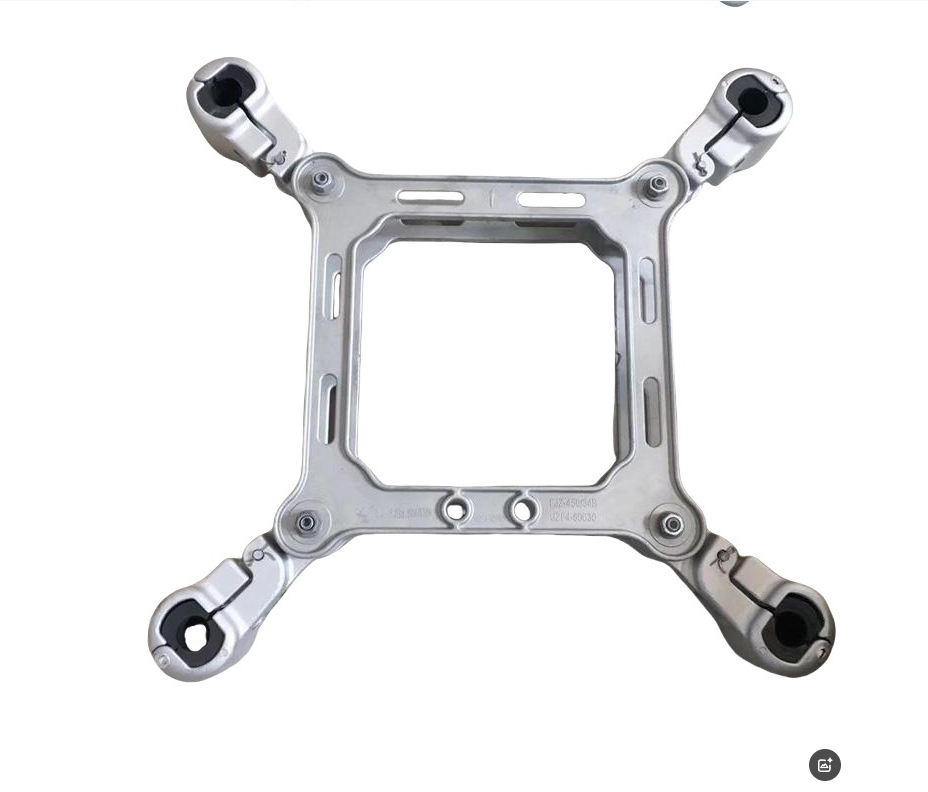
The Critical Role of Spacers in Mechanical System Integrity
How Spacers Ensure Proper Structural Alignment and Load Distribution
Spacers keep things spaced out correctly between moving parts, which stops metal from rubbing against metal directly. This kind of contact is actually responsible for around 23% of early bearing failures in factory machines. When spacers do their job right, they spread out the forces across bigger surfaces, cutting down those hot spots where pressure builds up by as much as 40% compared to when parts are just bolted together without any spacing. For shaft setups specifically, getting the spacers just right means keeping everything aligned within about half a millimeter. Getting this alignment spot on really matters because it cuts down vibrations that would otherwise wear things down over time and keeps the whole system running smoothly for years instead of months.
Impact of Spacer Performance on Long-Term System Reliability and Durability
According to recent turbine maintenance research, systems equipped with properly designed spacers need complete overhauls about 78% less often than standard setups. This makes a big difference for operators dealing with expensive downtime costs. When it comes to offshore installations, corrosion resistant materials make all the difference. Without them, joints tend to fail pretty quickly after being exposed to seawater for around 12 to 18 months straight. Grade 316 stainless steel stands out as a reliable choice because it holds its shape even when subjected to extreme heat conditions exceeding 800 degrees Fahrenheit. This stability prevents warping issues that could lead to catastrophic system failures in industrial settings where temperatures run hot.
Common Degradation Mechanisms and Failure Patterns in Spacer Materials
Effects of Environmental Exposure on Polymer and Metal Spacers
The environment plays a big role in how different spacer materials fail over time. Take polymers for instance they break down mainly because of UV light causing chain scission and hydrolysis reactions. We've seen erosion rates jump around 25% higher in those damp industrial environments where humidity stays consistently high. When it comes to metal spacers, galvanic corrosion becomes a real problem when they touch different types of alloys. Just look at 304 stainless steel spacers used near saltwater coastal areas these often start showing pits after about 18 months exposure to marine air. That's why many manufacturers are turning to hybrid solutions now. By putting polymer sleeves around metallic cores, they create barriers between reactive components. This simple design change cuts down on material degradation by roughly 40%, according to field tests conducted across multiple manufacturing facilities last year.
Thermal Cycling and Mechanical Stress as Primary Causes of Spacer Fatigue
Repeated thermal expansion and contraction generate cumulative micro-cracks, contributing to 62% of mechanical system failures in variable-temperature environments (ASME). In reciprocating machinery, spacers endure over 8 million load reversals annually, accelerating fatigue. A 2023 failure analysis revealed the following deformation thresholds:
| Stress Type | Average Deformation | Failure Threshold |
|---|---|---|
| Axial Compression | 0.12 mm/yr | 1.8 mm |
| Torsional Shear | 0.08° angular twist/yr | 4.2° |
Material Creep and Long-Term Deformation: Data Insight from ASME Journal of Mechanical Design (2022)
Polymer spacers tend to stretch out over time, especially when exposed to heat for long periods. For instance, PTFE materials can deform permanently by about 3.2% after sitting at 80 degrees Celsius for around 10,000 hours straight. Even tough metals such as Inconel 718 aren't immune to these effects either. When kept under constant pressure for five years, they actually lose roughly 15% of their original strength because microscopic flaws build up inside the material. The ASME research group suggests cutting down on how much weight we put on these spacers after about 8,000 hours of operation. Industry experts have found that following this guideline cuts down on total system failures in big machines by nearly three quarters compared to not making any adjustments at all.
Best Practices for Inspection and Early Detection of Spacer Damage
Why Regular Inspections Are Essential for Identifying Early-Stage Spacer Defects
Finding those tiny cracks, bumps on surfaces, and places where materials get thinner over time is really important before bigger problems happen. These issues typically come from heat stress or when parts aren't aligned properly. The thinning effect actually cuts down on spacer thickness somewhere between 0.1 to 0.3 millimeters each year, which makes nearby parts wear out faster than they should. A recent survey by the Society for Maintenance & Reliability Professionals in 2023 showed something interesting too. Plants that check their equipment every three months saw a drop in unexpected shutdowns of around 32%. That kind of data makes regular maintenance look like a smart investment rather than just another expense item on the books.
Recommended Inspection Frequency Based on Operational Conditions
Inspection intervals should reflect operational severity. High-temperature (>150°C) or high-vibration systems demand bi-monthly checks, while moderate-use applications may follow six-month cycles. Industry guidelines from the Rack Manufacturers Institute emphasize aligning inspection schedules with factors like thermal cycling, shock loads, and environmental exposure.
Non-Destructive Testing Methods to Evaluate Spacer Integrity Without System Downtime
Ultrasonic thickness gauging, dye penetrant inspection, and eddy current testing allow assessment without disassembly. Eddy current methods detect subsurface flaws as small as 0.5 mm with 98% accuracy, providing detailed integrity profiles while maintaining operational continuity.
Case Study: Optimizing Spacer Maintenance in Wind Turbine Gearboxes
Design and operational challenges of spacers under variable torque and vibration
The gearboxes in wind turbines put spacers through some serious stress, dealing with torque fluctuations around ±15% and vibrations that can go over 10 m/s², which really speeds up wear at the interfaces. According to the latest report on wind turbine reliability released in 2024, about one out of every five early gearbox failures actually comes down to problems with these spacers, especially noticeable in those big offshore installations where saltwater is constantly getting involved. The way wind loads cycle back and forth creates all sorts of uneven stress patterns, something that even the toughest hardened steel spacers struggle against over time.
Scheduled spacer replacement reducing turbine downtime by 40%
Biannual spacer replacements during planned outages reduced unplanned downtime by 40% across a three-year study of 150 turbines. By aligning replacements with low-wind seasons, operators minimized revenue loss and prevented 83% of potential gear misalignment incidents—each typically requiring over 300 labor hours to repair.
Using vibration analysis to predict spacer wear and prevent cascading failures
Vibration monitoring systems detect early spacer wear by analyzing harmonic patterns in the 2–10 kHz range, providing 6–8 months of advance warning. Machine learning models trained on operational data achieved 89% prediction accuracy, enabling timely interventions that maintain 98.5% turbine availability and preserve gear mesh precision.
The Future of Spacer Maintenance: Smart Monitoring and Predictive Strategies
IoT-enabled sensors for real-time monitoring of spacer deformation and stress
IoT sensors now provide continuous tracking of deformation and stress, detecting strain changes as small as 0.2%. These devices transmit live data to centralized platforms, allowing engineers to identify microstructural shifts before visible damage occurs. Field trials in 2024 showed IoT-based systems achieve 92% accuracy in predicting spacer failures.
AI-driven analytics to forecast spacer service life and maintenance windows
Machine learning models analyze over 40 variables—including thermal cycles and load frequency—to predict spacer lifespan within ±15 days over five years. By aligning maintenance with planned downtimes, these systems have reduced unplanned outages by 34% in power generation facilities.
Growing adoption of smart spacers in aerospace and rail: 60% increase since 2023 (McKinsey)
Aerospace leads adoption, with 72% of new aircraft designs incorporating sensor-embedded spacers. Rail operators report 28% fewer joint failures on high-speed lines, attributing improvements to real-time load distribution monitoring.
Building a proactive maintenance program: From reactive fixes to predictive scheduling
Forward-thinking organizations are shifting from reactive to predictive strategies by mapping 12-month equipment stress profiles and establishing performance baselines. This approach has reduced spare parts inventories by 19% and increased mean time between failures by 410 hours, as demonstrated in sensor-driven maintenance optimization studies.
FAQ Section
What is the primary purpose of spacers in mechanical systems?
Spacers are used to maintain proper alignment and load distribution between moving parts, preventing direct metal-on-metal contact that can lead to early bearing failures.
How do spacers impact long-term system reliability?
Spacers significantly reduce maintenance downtime by ensuring proper alignment and distribution of forces, which prolongs the lifespan of mechanical systems.
What environmental factors affect spacer materials?
Environmental factors such as UV exposure, humidity, and corrosion can degrade spacer materials, especially for polymers and metals exposed to saltwater environments.
Why are regular inspections of spacers necessary?
Regular inspections help identify early-stage defects such as micro-cracks or material thinning, allowing timely interventions to prevent major breakdowns.
How does technology aid in spacer maintenance?
Technologies like IoT sensors and AI-driven analytics provide real-time monitoring and predictive maintenance strategies, helping extend the service life of spacers.
Table of Contents
- The Critical Role of Spacers in Mechanical System Integrity
- Common Degradation Mechanisms and Failure Patterns in Spacer Materials
- Best Practices for Inspection and Early Detection of Spacer Damage
- Case Study: Optimizing Spacer Maintenance in Wind Turbine Gearboxes
-
The Future of Spacer Maintenance: Smart Monitoring and Predictive Strategies
- IoT-enabled sensors for real-time monitoring of spacer deformation and stress
- AI-driven analytics to forecast spacer service life and maintenance windows
- Growing adoption of smart spacers in aerospace and rail: 60% increase since 2023 (McKinsey)
- Building a proactive maintenance program: From reactive fixes to predictive scheduling
- FAQ Section