EN
EN

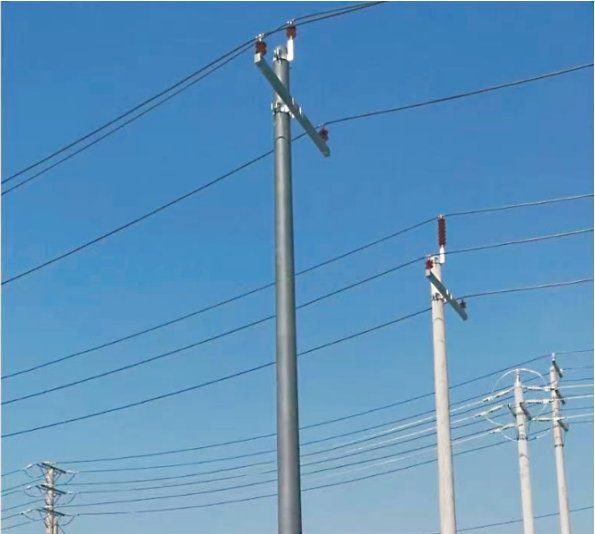
What Loads Act on Utility Poles? Core Load Types and Their Engineering Impact
Utility poles endure complex forces that dictate structural design. Accurately assessing these loads prevents failures and extends infrastructure lifespan across power distribution networks.
Vertical loads: Weight of conductors, transformers, and attachments
The downward pressure on utility poles comes mainly from all the gear they have to hold up. Things like power lines, transformers, communication boxes, cross arms, and those little ceramic insulators create what engineers call dead loads that never go away. Most poles end up carrying somewhere between 2,000 and 3,500 pounds worth of equipment, though this number goes way up around city substation areas where there's just so much infrastructure packed together. When poles don't have enough strength to handle these vertical forces, problems start happening fast. We've seen cases where poles buckle under the strain or their foundations sink into wet ground, particularly after heavy rains when soil gets saturated. That's why good engineering practice involves adding up all these weights carefully. The goal isn't just math perfection but making sure materials can actually take the punishment day after day without breaking down.
Horizontal loads: Wind pressure, conductor tension unbalance, and ice accumulation
Poles face serious challenges from lateral forces that cause them to bend under stress. When wind hits a pole, the pressure depends on how much surface area is exposed. At the same time, when conductors are stretched at angles across spans, they create additional pulling forces that can destabilize structures. According to national electrical safety codes, different regions have specific requirements for handling wind and ice loads. Take Zone 2 for instance where poles must be built to handle both half inch thick ice buildup and forty mile per hour winds. What makes things even worse is that ice sticking to conductors actually doubles the wind load effect. All these combined pressures mean deeper foundations are necessary for stability, and sometimes engineers need to install guy wires to reinforce vulnerable installations.
Torsional and dynamic loads: Swinging equipment, galloping conductors, and seismic events
When dealing with rotational forces and those short-lived transient impacts, engineers face all sorts of complicated ways things can fail. Take power lines for instance - when they start galloping around in strong winds, the stress on them becomes way higher than what regular calculations would predict, sometimes over three times as much! Then there's earthquakes shaking the ground and creating these annoying resonant frequencies. Transformers swinging back and forth also throw in their own problems by applying twisting forces. All these moving parts need serious analysis through methods like finite element modeling. For buildings needing seismic upgrades, contractors typically install those spiral shaped anchors along with materials that can bend without breaking, helping soak up the shockwaves before they cause damage.
How the NESC Defines Utility Pole Load Requirements and Safety Margins
The National Electrical Safety Code, or NESC as it's commonly called, sets out pretty strict guidelines for how utility poles should be built depending where they're located. These areas are categorized into three main types: Heavy, Medium, and Light loading zones. Each category comes with its own set of rules about what kind of weather conditions the poles need to withstand. Take Heavy zones for instance. Poles there have to handle wind speeds up to 80 miles per hour plus deal with half an inch of ice buildup. On the flip side, Light zones don't face such extreme conditions so their requirements aren't as demanding. This whole system helps keep power lines standing firm no matter if they're in mountainous regions prone to storms or flatlands with milder weather patterns.
| NESC Loading Zone | Wind Speed (mph) | Ice Thickness (inches) | Terrain Factors |
|---|---|---|---|
| Heavy | 80+ | 0.5 | Mountainous/coastal |
| Medium | 70 | 0.25 | Rolling hills |
| Light | 60 | 0 | Sheltered flatlands |
NESC loading zones and regional design criteria for utility poles
Critical zone specifications include maximum wind pressure calculations based on 50-year storm recurrence intervals; radial ice thickness standards derived from historical precipitation data; terrain multipliers for exposed elevations or coastal corridors; and soil classification requirements for foundation stability.
Minimum safety factors: Why 1.5× ultimate load capacity is non-negotiable
The NESC mandates 150% of ultimate load capacity as the minimum safety threshold for three fundamental reasons:
- Material degradation compensation: Wood poles lose 20–40% strength over 40 years
- Unforeseen dynamic loads: Galloping conductors during ice storms amplify forces by 300%
- Construction variances: Field modifications frequently deviate from engineered designs
This multiplier ensures structural integrity persists despite progressive wood fiber deterioration, foundation settling anomalies, unanticipated equipment additions, and extreme weather surpassing historical models.
Key Load Sources: Conductors, Equipment, and Modern Attachments on Utility Poles
Conductor tension and span geometry as dominant bending moment drivers
The tension in power lines puts serious strain on utility poles, particularly where they bend or terminate abruptly. How far apart those poles stand makes all the difference when it comes to stress levels. When spans get longer, the tension doesn't just go up linearly either it jumps around a lot more. We've seen cases where increasing the distance between poles by just 25% leads to about 56% higher bending stress because of how moments work mathematically. Things get even worse when there's unequal sagging across different sections or when lines change direction unexpectedly. That's why field engineers rely heavily on vector calculations to figure out these forces before anything breaks. Without proper analysis, we risk pole failures that could take down entire power grids during storms or high winds.
Fiber optic cables and wireless gear: Rising secondary loads on utility poles
Adding new equipment to utility poles builds up weight over time. For instance, fiber optic lines can add anywhere from 3 to 7 pounds for every foot they run along the pole. Then there are those 5G small cell boxes which themselves clock in at around 75 to even 150 pounds apiece. All told, these extra items make up roughly 12 to 18 percent of what our city power poles have to carry nowadays. And it's not just about weight either. Every single attachment expands how much surface area faces the wind because of all the brackets and supports needed to hold things in place. Getting this right matters a lot. When poles get too loaded down past about 85% capacity, engineers often find themselves looking at expensive upgrades or complete replacements down the road.
Assessing Capacity: Utilization Percentage, Reinforcement, and Replacement Decisions for Utility Poles
Utility poles require ongoing capacity assessments through three critical metrics: utilization percentage, reinforcement viability, and replacement triggers. Utilization percentage quantifies the ratio of applied loads to a pole’s rated capacity—exceeding 67% violates the NESC’s mandatory 1.5× safety factor. Industry analysis shows poles approaching 85% utilization demand immediate reinforcement via:
- Steel sleeve installation (restores 25–40% strength)
- Guy wire systems (reduce bending stress by 30–50%)
- Epoxy consolidation (arrests wood decay in 92% of cases)
Replacement simply has to happen when usage goes over 90% or when deterioration brings capacity down below what's needed for normal operations. The whole point of setting these thresholds is to stop catastrophic failures during bad weather conditions. Take power poles for instance they tend to fall apart about 4 times as often when overloaded compared to ones that are properly reinforced. Today's asset managers look at all this through risk assessment tools that balance how much money gets lost from outages versus what it would cost to fix things up front. This helps keep the electrical grid standing strong without breaking the bank on unnecessary upgrades.
FAQ
What is the main purpose of the NESC with regards to utility poles?
The main purpose of the National Electrical Safety Code (NESC) is to set guidelines for the construction and maintenance of utility poles to ensure safety and reliability across different loading zones and to account for regional weather conditions like wind and ice accumulation.
Why are vertical loads critical for utility poles?
Vertical loads such as the weight of conductors, transformers, and attachments are critical because they directly impact the structural integrity of utility poles. Without proper assessment, these loads can cause poles to buckle or their foundations to sink, leading to failures.
How do horizontal and torsional loads affect utility poles?
Horizontal loads from wind pressure and conductor tension, as well as torsional forces from dynamic events (like galloping conductors and seismic activities), can cause poles to bend or twist, requiring deeper foundations and reinforced installations such as guy wires.
When should utility poles be replaced?
Utility poles should be replaced when utilization exceeds 90% or when deterioration lowers capacity below operational needs, to prevent catastrophic failures during extreme weather conditions associated with power grid outages.
Table of Contents
- What Loads Act on Utility Poles? Core Load Types and Their Engineering Impact
- How the NESC Defines Utility Pole Load Requirements and Safety Margins
- Key Load Sources: Conductors, Equipment, and Modern Attachments on Utility Poles
- Assessing Capacity: Utilization Percentage, Reinforcement, and Replacement Decisions for Utility Poles
- FAQ