EN
EN

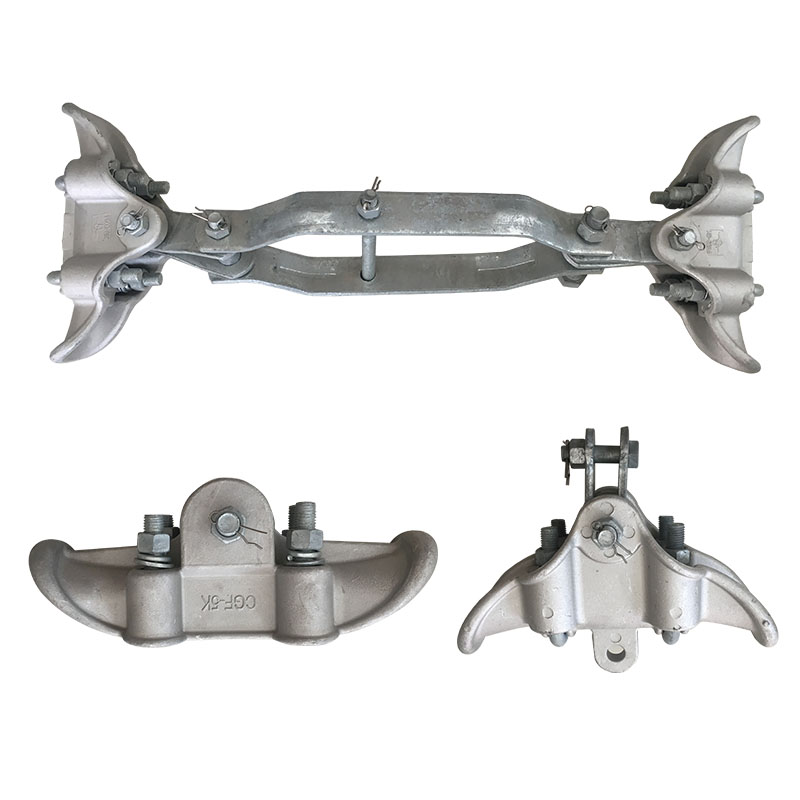
The Vibration Challenge: Why Suspension Clamps Must Resist Aeolian and Dynamic Loads
Aeolian Vibration Mechanisms and Their Impact on Conductor-Fitting Interfaces
When steady winds between about 5 and 25 kilometers per hour blow over power lines, they create something called aeolian vibration. This happens because the wind forms swirling patterns around the wires, causing them to shake back and forth at frequencies ranging from roughly 3 to 150 hertz. The shaking isn't very big but it's fast enough to put repetitive stress on where the wire meets its clamp connections, particularly noticeable at both ends of these connections. Over time, this leads to what engineers call fretting fatigue. If nothing is done about it, the constant rubbing wears down surfaces and starts tiny cracks that can grow into bigger problems. Studies show that in areas with strong winds, this kind of damage could actually lead to conductor strand failures as much as 40% more often according to research published by Transmission Research Group last year. Fortunately, newer types of suspension clamps designed specifically for resisting vibrations work against this issue using three main design features:
- Elastomer integration, converting kinetic energy into heat via hysteresis damping
- Optimized jaw geometry, distributing stress away from sharp edges prone to fatigue initiation
- Pre-twisted wire configurations, disrupting harmonic resonance and preventing localized stress amplification
Real-World Consequences: Fatigue, Micro-Slippage, and Premature Failure
Inadequate vibration control leads to three interrelated failure modes that compromise system reliability and longevity:
| Failure Mechanism | Primary Cause | Typical Outcome |
|---|---|---|
| Conductor Fatigue | Cyclic bending stress at clamp edges | Strand fractures reducing ampacity |
| Micro-Slippage | Fretting wear from micromovements | Grip strength degradation up to 60% |
| Corrosion-Fatigue | Synergistic pitting + vibration | Premature rupture in coastal areas |
Around one in every five unplanned outages in older transmission systems actually comes down to these specific mechanisms. When we look at micro-slippage specifically, it's pretty damaging stuff. In areas where vibrations are common, this tiny movement can cut the lifespan of clamps anywhere from 15 to 20 years short. And that means lots of money spent on inspections nobody really wants to do plus replacing parts way before their time. The newer suspension clamps tackle this problem differently. They don't try to stop all movement completely, which would be impossible anyway. Instead they work smarter, controlling how energy moves through the system and spreading out the stress points between the wire and the fitting itself.
Core Vibration Mitigation Strategies in Modern Suspension Clamp Design
Elastomer Integration: Hysteresis Damping and Dynamic Stiffness Tuning
Rubber parts play a vital role in reducing vibrations today, but they're not just simple padding material anymore. These components have become sophisticated dynamic elements through something called hysteresis damping. What happens is they take in those high frequency vibrations from wind and other sources, then turn them into heat energy. This stops dangerous resonance buildups at specific conductor frequencies that could cause problems. The really good news for engineers is that modern rubber materials keep their strength and flexibility even when temperatures swing from minus 40 degrees Celsius all the way up to plus 80. This means they can match up well with different vibration patterns over time. Real world tests show these rubber solutions cut down on vibration amplitudes by around 60% compared to traditional metal clamps. And this isn't just theoretical stuff either it actually stops tiny cracks from forming and prevents strands from wearing out prematurely, all while keeping the conductor tension and sag exactly where they need to be for proper operation.
Pre-Twisted Wire Geometry and Optimized Contact Surfaces for Stress Distribution
The pre-twisted wire geometry represents a smart approach to managing stress in conductors. By twisting the wires into a helical shape, it spreads out the clamping force evenly across the entire length instead of concentrating pressure at specific points. This helps avoid those sudden tension spikes that typically happen at contact spots where fatigue cracks tend to start forming first. Another key feature comes from the CNC machining process used for contact grooves. These grooves have rounded edges which actually boost the gripping surface area by about 40 percent compared to traditional designs, all while reducing wear and tear from abrasion. Combine these grooves with special anti-fretting coatings and we see around 70 fewer micro-slippage problems according to data from the Overhead Transmission Reliability Consortium back in 2022. What's really impressive though is how well everything holds together even when facing severe galloping events above 15 Hz frequencies. The system shows remarkable durability that goes well beyond what would normally be expected under standard Aeolian wind conditions.
Validated Performance: Field Evidence and Service Life Improvement with Advanced Suspension Clamps
Real-world validation confirms that integrated vibration mitigation delivers measurable infrastructure gains-particularly where environmental stressors compound mechanical fatigue.
Case Study: 72% Reduction in Fatigue Failures on 230 kV Coastal Overhead Lines
A 34-month field trial on coastal 230 kV lines compared legacy suspension clamps against advanced units featuring elastomer-damped interfaces and corrosion-resistant alloys. Results showed:
- 72% fewer conductor fatigue failures
- 68% reduction in micro-slippage incidents
- Maintenance intervals extended by 22 months
The success stemmed from synergistic stress redistribution-enabled by pre-twisted geometry-and enhanced energy dissipation at the conductor-clamp interface. These outcomes align with broader industry findings: material and design innovations in suspension hardware can extend overhead line service life by more than 15 years in corrosive, high-vibration environments.
Design Integration: Balancing Vibration Resistance with Environmental Durability and Load Capacity
Designing a good suspension clamp requires finding balance between three key factors: reducing vibrations, standing up to harsh environments, and handling structural loads properly. The challenge is making sure the clamp can resist vibrations without breaking down when subjected to extreme conditions. Think about situations where ice builds up on power lines or sudden electrical faults generate forces over 15 kilonewtons. To tackle these issues, engineers often turn to special rubber damping layers combined with twisted shapes in the clamp design. These components need thorough testing using computer simulations to check if they might create problem spots or weak areas when exposed to strong winds or those annoying galloping motions that sometimes occur in overhead lines.
Choosing the right materials matters just as much as anything else in this process. Compounds need to keep their hysteresis properties even after going through extreme temperature changes from minus 40 degrees Celsius all the way up to plus 80. They also have to stand up against UV damage and salt-related brittleness, especially around those conductor clamp interfaces where corrosion fatigue tends to start first. When we run accelerated life tests on these materials, what we find is that better designed systems actually stop those tiny cracks from spreading at contact points, which means maintenance intervals get extended by about half. For truly dependable solutions, manufacturers typically subject them to special environmental vibration chambers that simulate what happens along coastlines over many years but compressed into just a few weeks instead. These comprehensive tests show pretty clearly that when companies focus on reducing vibrations while maintaining both durability and strength under load, they end up saving roughly 34 percent on replacement costs over time according to research published by Transmission R&D back in 2023.
FAQ
What is Aeolian vibration?
Aeolian vibration occurs when steady winds create swirling patterns around power lines, causing them to shake at certain frequencies, which can lead to stress on clamp connections.
How do modern suspension clamps help reduce vibration-related issues?
Modern suspension clamps use elastomer integration, optimized jaw geometry, and pre-twisted wire configurations to disrupt harmonic resonance and minimize localized stress.
What role does elastomer integration play in vibration mitigation?
Elastomer integration helps convert vibration energy into heat, reducing amplitudes and preventing fatigue cracks from forming.
How effective are advanced suspension clamps compared to traditional ones?
Field trials show that advanced suspension clamps can reduce fatigue failures by 72% and micro-slippage incidents by 68%, extending maintenance intervals significantly.
Table of Contents
- The Vibration Challenge: Why Suspension Clamps Must Resist Aeolian and Dynamic Loads
- Core Vibration Mitigation Strategies in Modern Suspension Clamp Design
- Validated Performance: Field Evidence and Service Life Improvement with Advanced Suspension Clamps
- Design Integration: Balancing Vibration Resistance with Environmental Durability and Load Capacity