EN
EN

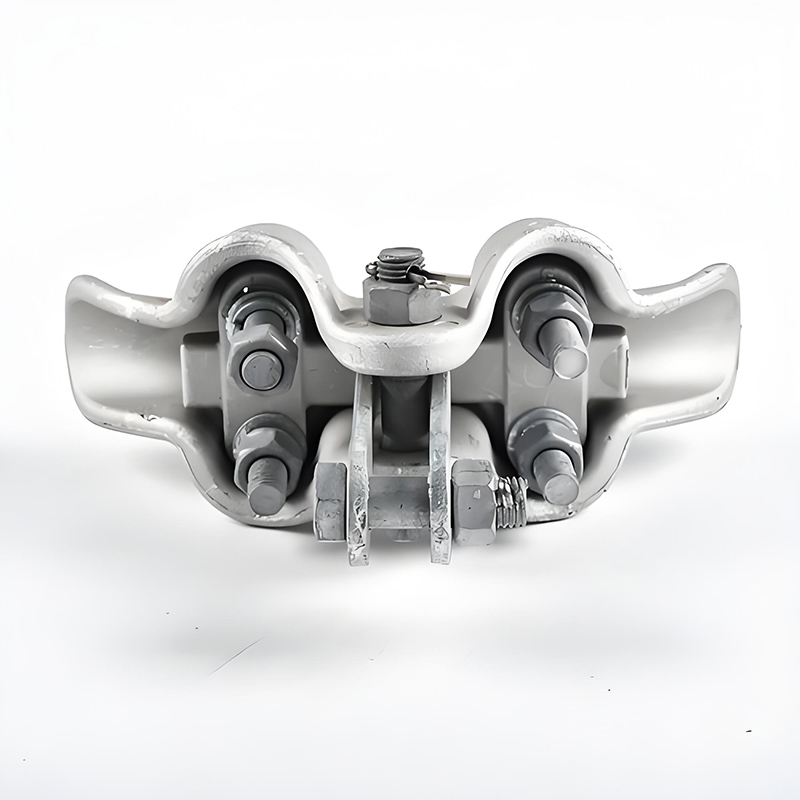
The Role of Suspension Clamps in Overhead Line Tension Management
Core function of suspension clamps in maintaining wire integrity and alignment
Suspension clamps form the backbone of overhead transmission systems, holding conductors securely to tower structures while maintaining both mechanical strength and proper electrical connections. These devices stop wires from slipping or shifting by spreading out the weight evenly along each span, which keeps the lines straight even when conditions change. When installed correctly, suspension clamps help avoid stress points in the conductor that might lead to cracks or breaks over time, particularly important during harsh winter storms with heavy ice buildup or strong wind gusts. The stability they provide maintains proper spacing between conductors and ground surfaces, preventing dangerous sag situations that could cause power outages or worse, endanger nearby structures and people.
How clamping force influences longitudinal control and tension distribution
The clamping force applied by suspension hardware directly governs longitudinal conductor behavior and inter-span tension balance. Too little force permits creep during thermal expansion; too much risks crushing strands or degrading protective coatings. Optimal clamping delivers three key outcomes:
- Longitudinal control: Restricting axial movement across temperature cycles
- Balanced load distribution: Equalizing tension between adjacent towers
- Vibration dampening: Suppressing harmonic oscillations that accelerate metal fatigue
Field validation confirms that properly tensioned clamps maintain conductor stability within 0.5% of design specifications—even under 120% overload conditions—preventing uneven tension distribution, a leading cause of premature hardware failure.
Slip Load Behavior and Its Impact on Wire Tension Stability
Understanding slip load thresholds and controlled slip in suspension clamps
Suspension clamps maintain tension stability by incorporating specific slip load thresholds. These are basically the calibrated forces where controlled, non-destructive conductor slippage happens when needed. According to industry standards like IEC 61284, these clamps need to hold up to 1.5 times the maximum operational tension before they accidentally let go. The whole point of this controlled slip mechanism is safety. During extreme weather conditions such as ice storms, it works as a kind of built-in emergency system. When things get really tough, the clamp allows just enough movement to redistribute stress across the line without compromising the overall structure or messing up the wire alignment. Field tests on actual 230kV power lines have shown something interesting too. Clamps that don't reach at least 12 kN of grip strength tend to fail about 34% more often in bad weather situations. That's not just numbers on paper either. It shows there's actually a very thin line between having good retention and allowing that necessary protective slip that keeps everything intact during emergencies.
Test standards and real-world performance: ASTM F2200 and IEC 61284 insights
The ASTM F2200 lab test basically mimics what happens over 50 years of actual use including all that back and forth stress plus corrosion effects to see how well clamps hold up in the long run. High quality clamps that pass both ASTM F2200 and IEC 61284 standards manage to keep at least 95% of their original tension even after going through over 10,000 vibration cycles. But here's the catch: when these clamps are actually installed in the field, things don't always go as planned. Installation mistakes happen all the time, especially with torque application getting it wrong just costs around 40% loss in grip strength compared to those perfect lab results. That's why sticking to both industry standards matters so much they give clamps that sweet spot between holding tight and allowing some movement which is absolutely critical for maintaining proper tension whether we're talking about equipment sitting in dry desert heat or rust-prone coastal areas where salt air eats away at metal components.
Installation Factors That Influence Suspension Clamp Performance
Torque-dependent clamping force and its effect on static tension retention
The amount of torque applied during installation plays a huge role in how much clamping force we actually get, which directly affects how well things stay tight over time. When people go beyond what the manufacturers recommend, they risk damaging those conductor strands or even cracking the clamp itself. This can cut down on grip strength by around 35-40% and makes everything wear out faster. On the flip side, not tightening enough leads to slow slippage when there's constant weight on it, and this just keeps getting worse day after day. The IEC 61284 standard sets some baseline requirements for slip loads, though meeting these numbers really comes down to getting the torque right. Some real world testing has shown that jobs done within proper tolerance levels tend to have about 75-80% fewer problems related to tension loss. For anyone working on site, regular tool calibration is absolutely essential. Don't forget to account for environmental factors too like temperature changes since these impact how surfaces interact and create friction.
Vibration Damping and Long-Term Tension Compliance
Elastomeric liners and articulated designs reduce aeolian vibration-induced stress
Wind induced high frequency oscillations known as Aeolian vibrations are actually one of the main causes of wear and tear on conductors over time. Suspension clamps work against this problem using special rubber-like polymer linings inside them. These materials absorb vibration energy through internal friction processes, cutting down stress levels by around 80% according to field tests we've seen. Some designs incorporate articulated parts with swivel connections too. This allows forces to spread out more evenly across the system instead of concentrating at specific points which can lead to failures. When combined, all these components help control those tricky resonance frequencies between 5 and 35 Hz where most wind power gets transferred to the lines. As a result, conductors last much longer since they experience far less repeated stress damage from day to day operation.
Balancing grip strength and flexibility to maintain optimal wire tension
Keeping tension compliance over time requires finding just the right balance between things. Need enough grip so nothing slips around, but also some give for when temperatures change or there are sudden forces acting on the system. Today's suspension clamps manage this tricky act thanks to careful engineering work. They have grooves that fit specific conductor sizes, contact areas made with materials ranging from 60 to 90 on the Shore A scale, and pressure points spread out along the clamp itself. These designs keep the tension pretty close to what it should be, staying within about 10% either way throughout all sorts of conditions from freezing cold at minus 40 degrees Celsius up to hot environments reaching 80 degrees. The result? Reliable spacing between components and proper sag management without damaging the conductors themselves, which is critical for long term performance.
FAQs
What is the primary role of suspension clamps in overhead lines?
Suspension clamps keep conductors aligned and secure to tower structures, maintaining both mechanical and electrical integrity.
How do suspension clamps prevent wire tension issues?
Proper clamping force manages longitudinal control, balances load distribution, and dampens vibrations, ensuring stable tension.
What standards do suspension clamps need to comply with?
High-quality clamps should meet standards like ASTM F2200 and IEC 61284 to ensure long-term performance and tension retention.
Why is torque important in suspension clamp installation?
Correct torque application ensures optimal clamping force, reduces slippage, and prevents damage to conductors and clamps.
How do elastomeric liners aid in tension management?
These liners absorb vibration energy, reducing stress and preventing fatigue-induced damage to conductors.