EN
EN

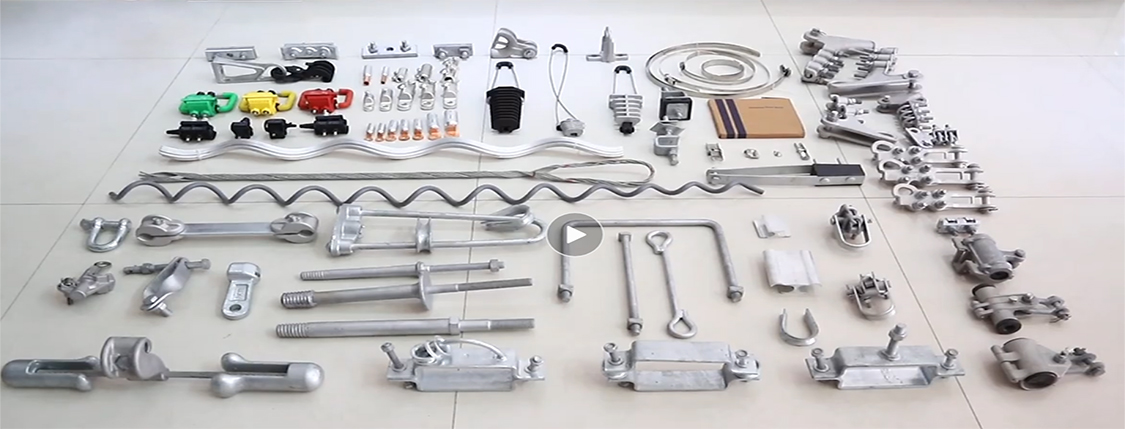
Load-Bearing Power Line Fittings: Suspension and Strain Clamps
How suspension clamps support conductors under normal operating tension while allowing movement
Suspension clamps hold conductors in place on poles and towers but also allow for some natural movement caused by things like wind blowing, temperature changes, and ice buildup. The clamp shapes, which are either U or C shaped, put even pressure on the conductor using parts made from alloys that resist rust and wear down over time. These clamps let the conductor rotate just a little bit and move side to side when needed, which helps keep everything structurally sound despite all sorts of weather conditions. Compared to fixed attachments that don't move at all, this built-in flexibility actually stops problems from developing in aluminum wires and those special ACSR conductors that run across long distances between supports.
Why strain clamps are critical for dead-ending, anchoring, and handling unbalanced axial loads
Strain clamps, sometimes referred to as dead end clamps, hold conductors in place at spots where the line terminates or changes direction. These are needed when tension forces go beyond what's normal during operation, typically found at corners, sudden elevation changes, or simply at the end of a line. Most quality strain clamps can handle unbalanced stress loads reaching about 90 percent of what would break the conductor itself. According to field reports, picking the wrong type of strain clamp contributes to roughly one third of all outages caused by bad weather conditions. The design includes those serrated jaws plus compression sleeves that grip tightly so conductors don't slip around, which stops them from sagging dangerously low. For power lines running through tough landscapes such as 345kV transmission lines going over mountains, having strong enough strain clamps becomes absolutely critical for keeping the whole electrical grid stable and reliable.
Protective Power Line Fittings: Vibration Dampers and Armor Rods
Aeolian vibration control: How Stockbridge and spiral dampers extend conductor service life
Wind-induced Aeolian vibrations create high frequency movements that slowly wear down suspension points over time, eventually causing strands to snap and conductors to fail prematurely. Stockbridge dampers help fight this problem using what's called tuned mass damping. Basically, these devices have heavy weights attached at each end connected by a messenger cable, which turns the vibration energy into heat instead of letting it build up. Another option is spiral dampers that coil around the conductor itself, providing friction based suppression across the entire length of the wire. These solutions cut down on peak stresses by roughly half compared to lines without any protection, allowing conductors to last well beyond three decades in service. Getting the spacing right between these dampers is important too, since it prevents dangerous resonance patterns while still keeping the conductor flexible enough to handle extreme temperatures and ice buildup conditions.
Conductor protection: Armor rods and preformed guards preventing abrasion and fatigue at suspension points
Suspension points are where conductors really take a beating due to constant movement and those pesky stress concentrations when they bend. Armor rods, which are basically spiral wound aluminum or galvanized steel sleeves, spread out the mechanical load across about 12 to 24 inches of contact area. This simple design cuts down on localized pressure by roughly 70%, making a big difference in longevity. Another good option is preformed guards made from factory molded polymer shapes that fit the conductor geometry almost perfectly. These eliminate those frustrating installation mistakes that happen in the field. Both solutions work wonders at preventing fretting fatigue because they cushion the suspension interfaces while keeping the strands intact. What's interesting is how their natural ability to dampen vibrations actually works hand in hand with dedicated Aeolian control systems. Together they create this dual layer protection system that stands up much better against environmental wear and tear on overhead lines.
Connection and Safety Power Line Fittings: Splices, Connectors, and Grounding Hardware
Reliable continuity: Compression splices vs. bolted connectors for mid-span and termination applications
Compression splices and bolted connectors each play different parts when it comes to keeping electrical circuits intact. The compression type makes those permanent connections through cold welding with hydraulic force, which gives better resistance against vibrations and handles more current flow. That's why these are often used where wires might move around in the middle of spans. According to industry tests, these splices keep resistance increases below 0.1 percent even after enduring 10 million vibration cycles. On the other hand, bolted connectors provide connections that can be adjusted and maintained, perfect for ending points at towers or substations. But there's a catch they need regular tightening checks because temperature changes can cause them to loosen over time. When dealing with high voltage lines exceeding 230 kilovolts, compression splices cut down failures by about 70 percent compared to their bolted counterparts according to recent studies from EPRI. Choosing between them really depends on what voltage we're working with, how harsh the environment is, and whether someone will need access later for maintenance work.
Grounding integrity: Exothermic welds, clamp-on grounds, and fault-current performance standards
Proper grounding hardware protects both workers and equipment when electrical faults occur. Exothermic welding creates strong molecular bonds between conductors through chemical reactions, resulting in conductivity that matches the conductor material itself. This makes it ideal for long-term substation grounding needs. For quick temporary work, clamp-on grounds offer fast connections that can be removed easily. Wedge style designs let technicians install them in less than a minute and a half most times. All grounding components need to comply with IEEE 80 standards regarding fault currents. Take a 40kA rated clamp for instance it should handle a half-second surge without temperature rising above 250 degrees Celsius. Newer grounding systems help control step potentials by keeping voltage gradients below about 2 volts per amp meter during faults. Regular thermal scans cut down on failures by around 85 percent because bad connections tend to get hot first, showing up clearly on infrared cameras well before anything breaks completely (according to NFPA findings from last year).
Material, Standardization, and Selection Criteria for Power Line Fittings
When choosing power line fittings, engineers need to look at material qualities, check if they meet global standards, and consider what kind of environment the equipment will face on site. Most conductor hardware still relies on aluminum alloys because these materials offer great strength without being too heavy and resist corrosion pretty well. Copper continues to be the go to material for grounding parts though, since nothing conducts electricity better than pure copper does. Out in those salty coastal areas where rust eats through metal fast, composite polymer fittings are becoming popular alternatives. According to a study from NACE back in 2022, these polymer options cut down maintenance needs by about forty percent when compared against regular metal fittings that haven't been treated.
Environmental compatibility directly dictates longevity. Coastal installations require salt-spray resistance exceeding 1,000 hours per ASTM B117. High-altitude deployments demand UV-stabilized polymers; industrial areas necessitate chemical-resistant coatings. Temperature cycling tolerance from –40°C to +80°C prevents brittle fracture in alpine regions and thermal deformation in desert environments.
Standardization ensures interoperability and safety. Key benchmarks include:
- IEC 61284 for mechanical load testing
- IEEE 1240 for corona performance thresholds
- ANSI C119.4 for compression connector reliability
Third-party certification (e.g., KEMA, ESTI) validates adherence prior to installation. Neglecting these standards risks premature failures—corrosion-related replacements cost utilities $740,000 annually per 100 circuit-miles (Ponemon 2023).
Selection prioritizes three dimensions:
- Mechanical Load Capacity: Must exceed maximum tension with a minimum 2.5× safety margin
- Electrical Conductivity: Grounding fittings require ≤ 5 µΩ resistance
- Environmental Durability: Corrosion resistance aligned with ISO 12944 C5-M classification
Lifecycle cost analysis proves decisive: while polymer-composite suspension clamps carry a 15% higher initial cost, their 30-year service life significantly outperforms galvanized steel’s average 12-year replacement cycle. This strategic integration of material science, regulatory compliance, and operational parameters underpins long-term grid resilience.
FAQ
What is the purpose of suspension clamps in power line fittings?
Suspension clamps support conductors under normal operating tension while allowing some movement due to environmental changes such as wind or temperature fluctuations.
Why are strain clamps essential for power lines?
Strain clamps are critical for dead-ending, anchoring, and handling unbalanced axial loads, especially at points where the line terminates or changes direction.
How do vibration dampers help in power line fittings?
Vibration dampers, such as Stockbridge and spiral dampers, control Aeolian vibrations caused by wind, helping to extend the service life of conductors by reducing stress and resonance.
What role do armor rods play?
Armor rods prevent abrasion and fatigue at suspension points, distributing mechanical loads over a broader area and lengthening the service life of conductors.
What are the key considerations when choosing power line fittings?
The main considerations include mechanical load capacity, electrical conductivity, and environmental durability, all within global standards and specific site needs.