EN
EN

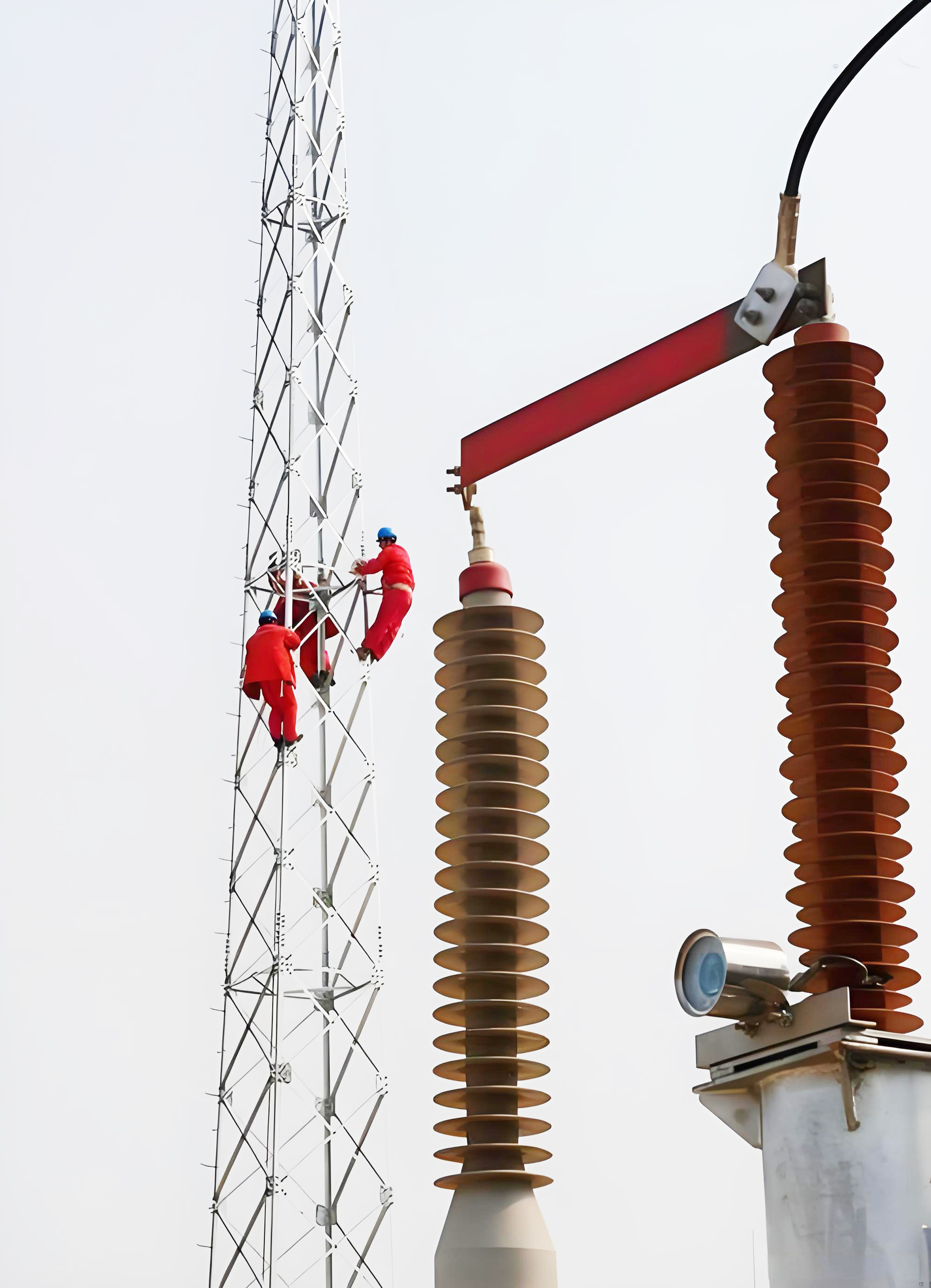
Lightning Arrester Working Principle: Voltage-Triggered Surge Protection
Threshold-Based Activation: Insulating Under Normal Voltage, Conducting During Surges
Lightning arresters work kind of like smart switches that have two main operating modes. When everything is running normally at or below 100% of what they’re rated for, the inside parts mostly consist of those metal oxide varistor discs we call MOVs. These components show really high resistance levels, something like over 1 million ohms, which basically means they act as good insulators stopping any current from going to ground. That helps keep power losses down and stops interference when things are stable. But if there’s a sudden spike in voltage caused by lightning strikes or switching operations that goes beyond their carefully set trigger point usually around 20 to 40 percent higher than normal voltage levels the arrester flips into action almost instantly within billionths of a second. At this point it creates a super low resistance path to earth ground, sometimes under just one ohm, channeling massive surge currents that can be well over 100 thousand amps away from whatever equipment needs protection. After the voltage spike passes and things go back to regular operation, the arrester resets itself automatically back to that high resistance mode. This ability to reset on its own keeps it ready all the time without getting affected by everyday voltage changes, and importantly activates long before any connected equipment might get damaged by reaching its maximum insulation limits.
Metal Oxide Varistor (MOV) Technology and Nonlinear VI Characteristics
Today's lightning arresters depend heavily on Metal Oxide Varistor (MOV) technology, which is based on sintered zinc oxide (ZnO) ceramic discs mixed with bismuth oxide and various other metal compounds. What makes these materials special is their ability to create that crucial nonlinear relationship between voltage and current needed for effective surge protection. Under regular operating conditions, the leakage current stays very low, often below 1 milliamp because the material acts like it has almost infinite resistance. But when there's a voltage spike, electrons start moving through the tiny gaps between ZnO grains, causing the resistance to drop dramatically. This lets large amounts of current pass through while keeping the voltage level tightly controlled. The performance curve for these materials is much steeper compared to older options like silicon carbide or gap-type arresters, with typical exponents ranging from 30 to 50. This characteristic allows MOV-based arresters to provide superior protection against electrical surges in modern power systems.
- Response times under 25 ns
- Voltage clamping ratios of 2:1 to 3:1
- Energy absorption capacity exceeding 20 kJ per disc
Their self-healing microstructure sustains repeated surge events without permanent degradation, ensuring long-term coordination with equipment Basic Insulation Level (BIL) ratings.
Surge Diversion and Ground Path Management
Creating a Low-Impedance Path to Earth for Transient Currents
Good surge protection really depends on creating a strong, low impedance connection between the arrester and earth. Ideally, grounding resistance should stay under 1 ohm for each down conductor. When lightning strikes or surges happen, this setup keeps voltage spikes in check by reducing the V=I x Z equation during discharge events. Without proper grounding, equipment can face dangerous voltage differences that damage components over time. All metal parts need to be bonded together too transformer tanks, those big circuit breaker boxes, bushings, even structural steel must connect to a single earth grid with low impedance. Systems without this kind of coordinated grounding tend to fail about 20% more often from surges. Why? Uncontrolled voltage gradients cause flashovers and put stress on insulation materials. Remember, when transient currents hit, they take whatever path offers least resistance, not necessarily the shortest one. So grounding isn't just something nice to have it's absolutely essential for any arrester system to work properly.
Energy Dissipation Without Thermal Runaway or System Overstress
Metal Oxide Varistor (MOV) based arresters work by soaking up and getting rid of surge energy through a process called controlled conduction that can be reversed as needed, and they don't need those old fashioned sacrificial gaps or gas release mechanisms anymore. What makes these devices so effective is their nonlinear resistance characteristics which allow them to switch quickly between acting as insulators and conductors. This helps keep residual voltages low even when dealing with massive current surges measured in thousands of amperes. Thermal considerations are built right into how these arresters are designed too. When they absorb energy, the heat gets distributed throughout the composite disc structure and outer casing instead of building up in one spot, which stops things like hotspots forming or worse case scenarios where temperatures get out of control. Field data from EPRI shows that properly sized and installed units cut down equipment failures by around two thirds in real world applications. The reason for this kind of reliability? These arresters stay within safe operating temperatures most of the time, protecting important components downstream such as transformers and switchgear gear without adding extra strain back onto the electrical system itself.
Residual Voltage and Insulation Coordination for Reliable Protection
Aligning Lightning Arrester Residual Voltage with Equipment BIL Ratings
The residual voltage, which is basically the highest voltage we measure across those arrester terminals during a surge discharge, stands out as probably the most important factor when coordinating insulation systems. To protect equipment properly, this number needs to stay well under what's called the Basic Insulation Level (BIL) rating for whatever devices are connected. According to EPRI research, once residual voltage gets above about 85% of that BIL threshold, things start getting dangerous fast. The data actually indicates around a 72% jump in dielectric failures just in transformer windings by themselves. Today's metal oxide varistor (MOV) arresters manage to clamp down on surges pretty accurately thanks to better disc stacking techniques and improved grading methods. These advancements help maintain consistent residual voltages even when dealing with really high current levels. Getting this right means paying attention to several fundamental aspects in the coordination process.
- Confirming maximum residual voltage (at rated discharge current) is 85% of equipment BIL
- Accounting for inductive voltage rise along grounding conductors especially in high-dI/dt surges
- Revalidating margins after system upgrades or changes in fault levels
This disciplined approach prevents catastrophic insulation failures avoiding substation outages that can cost $500,000+ in repair, downtime, and collateral damage.
Real-World Application: Protecting Transformers, Circuit Breakers, and Substations
Lightning arresters act as the primary shield for vital power systems, redirecting harmful surge energy away from delicate parts before damage occurs. When dealing with transformers, particularly those filled with oil, installers position arresters right next to the high voltage bushings to safeguard the winding insulation. Without proper protection, sudden electrical surges can lead to catastrophic failures inside these units because of those sharp voltage spikes. Circuit breakers present another challenge since they produce switching surges when interrupting current flow. Arresters help by limiting these voltage peaks that might otherwise wear down contacts faster or mess up how arcs get extinguished. Throughout whole substations, engineers place arresters at various points including feeder entrances, connections on busbars, and close to important equipment to form multiple layers of protection. This approach stops surges from spreading between connected devices, and according to IEEE studies, reduces transformer failures by around 40% in areas hit hard by lightning strikes. A basic principle guides installation decisions too: the arrester needs to sit closer to what it’s protecting than anywhere else where surges might enter, so electricity naturally takes the easier path through the arrester instead of damaging insulation materials.
FAQs About Lightning Arresters
What is a lightning arrester?
A lightning arrester is a device used in electrical power systems to protect equipment from high voltage surges caused by lightning strikes or switching events. It does so by providing a low-resistance path to ground, safely diverting any excess electrical current away from sensitive components.
How do lightning arresters work?
Lightning arresters work by remaining in a high-resistance state during normal voltage conditions to act as an insulator. When surge voltages exceed a predetermined threshold, the arrester swiftly switches to a low-resistance state, channeling the high current voltages to the ground effectively protecting the system.
What is the role of Metal Oxide Varistor (MOV) in lightning arresters?
Metal Oxide Varistors, or MOVs, play a critical role in lightning arresters through their nonlinear voltage-current characteristics. During normal functioning conditions, they exhibit high resistance and low leakage current. During surge conditions, their resistance drops significantly, allowing large currents to pass and safeguarding the equipment from excessive voltage levels.
Why is grounding important for lightning arresters?
Grounding is crucial in ensuring that the lightning arrester is able to effectively carry surge currents safely to the earth. Low impedance grounding paths minimize the potential damage to equipment by preventing voltage spikes and reducing dangerous potential differences across components.