EN
EN

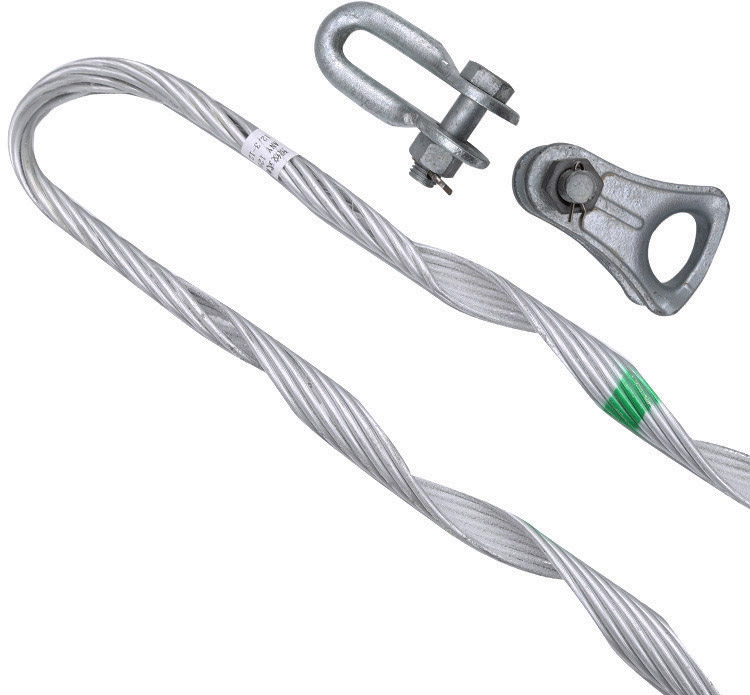
Matching Preformed Armor Rods to Conductor Type and Mechanical Requirements
Compatibility with AAC, AAAC, ACSR, Copper, and Galvanized Steel Conductors
When choosing preformed armor rods, getting them right for the conductor material is really important. AAC and ACSR conductors actually need different kinds of rods because they expand at different rates when heated and can cause corrosion problems where aluminum touches steel. Copper conductors call for special rods with dielectric coatings to stop chemical breakdown from happening. Galvanized steel conductors on the other hand need stronger rods that won't bend or deform when pulled tight. Getting this wrong cuts down on grip strength by about 40 percent, which means there's a much bigger chance of slippage when temperatures change or winds pick up something that researchers have confirmed in their studies from last year. AAAC conductors require rods that meet ASTM B316 standards so they stay flexible enough not to damage strands during those annoying vibrations caused by wind movement across the lines.
Restoring Tensile Strength: Load Transfer Mechanics and IEEE 1242-2022 Compliance
Preformed armor rods help maintain structural strength by spreading out tension forces using controlled spiral compression. The rod's spiral shape actually moves stress away from broken parts of the conductor to the still good sections. When properly installed according to what the manufacturer says, these rods can bring back around 95% of the original tensile strength. Getting this kind of performance depends heavily on following the IEEE 1242-2022 standard. This industry guideline sets down three requirements that just cant be ignored:
- Minimum 1,200-hour fatigue resistance under oscillatory loading
- Full-scale pull testing at 60% of the conductor’s ultimate tensile strength
- Uniform radial pressure distribution within ±15% variance across the rod’s contact surface
Rods failing these requirements exhibit progressive loosening under cyclic stress—particularly hazardous in high-wind corridors. Third-party validation per IEEE 1242-2022, including dynamic strain testing on representative conductor assemblies, is essential to verify load-transfer reliability before field deployment.
Material Selection for Durability: Aluminum Alloy vs. Aluminum-Clad Steel Preformed Armor Rods
Trade-offs in Conductivity, Yield Strength, and Corrosion Resistance by Environment
When deciding between aluminum alloy and aluminum clad steel rods, engineers need to weigh factors like electricity flow, physical strength, and how well they stand up to weathering. The aluminum alloy versions conduct electricity pretty well at around 61% IACS but aren't super strong mechanically with yield strengths only reaching 40 to 50 MPa. These work best when the application doesn't require much tension but needs good conductivity or protection against corrosion. On the other hand, aluminum clad steel rods have a steel center wrapped in aluminum that gives them way better strength, over 250 MPa actually, which makes them great for situations where there's lots of tension or at the ends of structures. What happens with corrosion is quite different though. Regular aluminum alloys create their own protective layer that keeps repairing itself, so they last longer near coasts or in damp areas. But the clad ones are totally dependent on that outer aluminum layer staying intact. If it gets damaged even slightly, the steel underneath starts rusting fast, particularly bad in places where there's sulfur dioxide or chloride pollution from factories nearby.
| Property | Aluminum Alloy Rods | Aluminum-Clad Steel Rods |
|---|---|---|
| Conductivity | High (61% IACS) | Moderate (20–30% IACS) |
| Yield Strength | 40–50 MPa | 250+ MPa |
| Optimal Environment | Coastal/humid regions | Low-corrosion inland areas |
Corrosion Performance Benchmarks: ASTM B801 Salt Spray Testing (1,500 hrs vs. 3,200 hrs)
The ASTM B801 salt spray test gives us a standard way to measure how well materials resist corrosion over time. When it comes to aluminum alloy rods, they generally last around 3,200 hours before we see any signs of pitting. This happens because these alloys form a pretty uniform protective oxide layer on their surface. Things look quite different with aluminum-clad steel rods though. These typically fail after about 1,500 hours of testing. Problems usually start at tiny defects or cuts in the metal where the protective coating isn't intact anymore, letting rust spread right into the steel underneath. That's an almost 113% difference in performance between the two types. For structures meant to last 30 years or more, this matters a lot. Anyone working on marine projects or coastal installations would be wise to stick with pure aluminum alloy rods. The clad steel option works okay sometimes in areas away from saltwater and pollution, but only if there are regular checks for those small flaws in the coating both when installing and during routine maintenance.
Dimensional Fit and Electrical Safety: Sizing Preformed Armor Rods for Optimal Performance
Diameter Ratio Guidance (1.05–1.12× Conductor OD) and Flash-Over Mitigation
Getting the dimensions right matters a lot for both how well things work mechanically and keeping electrical systems safe. When we talk about preformed armor rods, their outer diameter should ideally be somewhere between 1.05 times and 1.12 times the conductor's own outer diameter. That might sound like a small margin, but it actually covers all the important aspects from mechanical strength to electrical properties at once. If the ratio drops below 1.05, there's too much squeezing happening radially, which can warp strands when temperatures change. On the flip side, going over 1.12 means less contact surface area, making vibrations worse and cutting service life nearly in half around areas with strong winds. From an electrical standpoint, staying within this sweet spot helps eliminate those pesky air gaps where electric fields tend to gather. Field tests show that even slight variations outside of plus or minus 0.03 times the conductor diameter boost partial discharges by about 60%, which wears down insulation faster than expected. Well-sized armor rods also help distribute voltage evenly across conductor surfaces, cutting down on flashovers during bad weather conditions by roughly 45% according to what the IEEE has observed in actual installations.
Bulk Procurement Strategy: Balancing Cost, Lead Time, and Lifecycle Value of Preformed Armor Rods
When buying in bulk for infrastructure projects, companies need to balance what they pay upfront against how reliable the systems will be down the road. Sure, getting volume discounts looks good on paper because each unit costs less, but there's a catch. Longer delivery times mean delays in essential transmission work, which can end up costing far more money through lost business opportunities or expensive last-minute fixes. What really matters though is looking at the whole picture over time. Take steel rods for instance. Those with better resistance to rust or stronger structural properties might cost about 15 to 20 percent more initially, but maintenance records from power utilities show these last roughly 40 percent longer before needing replacement during their 15 year lifespan. Smart procurement teams often split their orders between suppliers. Around two thirds go to their main vendor who provides stable pricing and consistent quality, while keeping some flexibility by working with smaller suppliers helps avoid problems if one part of the supply chain gets disrupted. And don't forget about specs either. Making sure all projects stick to the same standards for materials, measurements, and compliance certifications gives buyers much stronger bargaining power when negotiating contracts, all while maintaining the necessary technical requirements for safe operation.
FAQ
Do different conductors require different types of preformed armor rods?
Yes, different conductor materials like AAC, AAAC, ACSR, Copper, and Galvanized Steel require specific types of armor rods to address unique thermal expansion rates and potential corrosion issues.
How do preformed armor rods restore tensile strength?
Preformed armor rods maintain structural integrity by redistributing load through controlled spiral compression, which moves stress away from damaged sections of a conductor.
What are the environmental conditions affecting material selection for armor rods?
The choice between aluminum alloy and aluminum-clad steel rods is influenced by environmental factors. Aluminum alloys are best suited for coastal and humid regions due to their natural corrosion resistance. Aluminum-clad steel rods, offering higher strength, are more suitable for low-corrosion inland areas.
Why is proper sizing of preformed armor rods important?
Correct sizing ensures mechanical strength and safety by maintaining appropriate contact and minimizing risks like strand warping and insulation degradation, which are heightened by incorrect sizing.
What should be considered in bulk procurement of armor rods?
When purchasing in bulk, consider initial cost versus lifecycle value, delivery times that affect project timelines, and adherence to material standards to ensure long-term reliability and operational safety.
Table of Contents
- Matching Preformed Armor Rods to Conductor Type and Mechanical Requirements
- Material Selection for Durability: Aluminum Alloy vs. Aluminum-Clad Steel Preformed Armor Rods
- Dimensional Fit and Electrical Safety: Sizing Preformed Armor Rods for Optimal Performance
- Bulk Procurement Strategy: Balancing Cost, Lead Time, and Lifecycle Value of Preformed Armor Rods
-
FAQ
- Do different conductors require different types of preformed armor rods?
- How do preformed armor rods restore tensile strength?
- What are the environmental conditions affecting material selection for armor rods?
- Why is proper sizing of preformed armor rods important?
- What should be considered in bulk procurement of armor rods?