EN
EN
Why Vibration Dampers Are Critical for Grid Reliability and Lifecycle Cost Control
Aeolian vibration mechanics and conductor fatigue failure risks
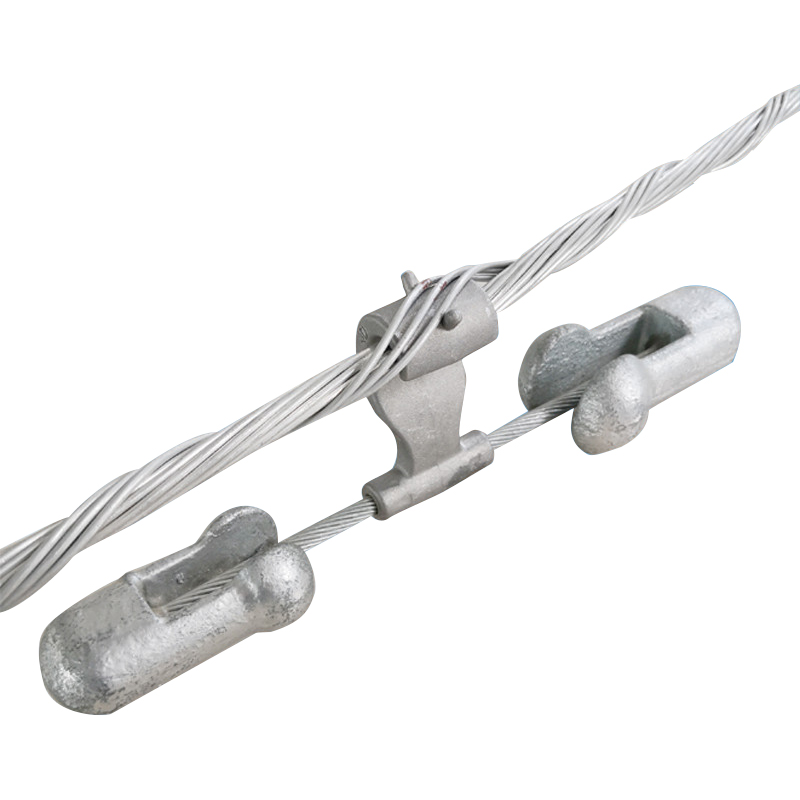
When steady winds blow across power lines, they create what engineers call Aeolian vibrations these are basically fast moving, tiny wiggles that put constant stress on where the wires hang from towers. If nothing stops them, this back and forth movement wears down the wire strands over time. Some field reports show conductors actually breaking within just three years in areas with strong consistent winds. That's why vibration dampers matter so much. These devices work by using weights and special materials that soak up the energy from those vibrations. They cut down on the worst effects, sometimes reducing stress levels by as much as 90%. Without proper damping, cracks start forming at critical connection points like clamps and splices, which can lead to serious problems including line slippage, dangerous swaying motions called galloping, and even tower failures. Installing these dampers ahead of time keeps the conductors working longer and saves money too. One industry study estimates savings above half a million dollars per mile when replacements are delayed (EPRI 2023).
ROI of proactive vibration damper deployment: Preventing unplanned outages and repair costs
The financial benefits of vibration dampers come from shifting from reactive maintenance approaches to more proactive asset management strategies. Industrial clients often face huge costs when unexpected failures happen due to conductor wear and tear. According to Ponemon Institute research from 2023, these unplanned outages typically run around $740,000 each time just for downtime alone, without even counting the money spent on fixing things afterward. What makes dampers so valuable is their ability to prolong conductor lifespan by roughly 15 to 20 years. This means fewer replacements needed over time, which cuts down on all those extra costs related to permits, land access rights, and setting up new installations. Buying in bulk can bring down individual component prices by anywhere from 30% to 40%, plus it streamlines how inspections get done and when parts need replacing. The real kicker though? Utilities that maintain good performance records tend to stay clear of regulatory fines connected to SAIDI and SAIFI standards. Looking at everything together including savings from avoiding emergency fixes, lower liability risks during power outages, and better overall equipment usage rates, most companies see about a four to one return on investment within just five years of implementing damper systems.
Key Technical and Compliance Criteria for Bulk Vibration Damper Procurement
Material and certification standards: ASTM B734, IEC 61284:2021, and wind-zone alignment
Good procurement practices start with following established material and performance standards. When it comes to vibration dampers, they need to meet ASTM B734 requirements for aluminum alloys regarding both mechanical strength and resistance to corrosion. Plus there's IEC 61284:2021, which serves as the global standard for overhead line fittings. This standard requires thorough fatigue testing when simulating wind conditions. Together these certifications help guarantee at least 30 years of reliable service even in harsh environments. Wind zone considerations are absolutely critical too. For dampers installed in Category IV areas where sustained winds exceed 40 miles per hour, special reinforcement of the helix design along with increased clamping torque becomes necessary to stop issues like conductor creep and slippage problems. The numbers tell the story clearly enough. Field tests conducted by EPRI in 2023 show that equipment not meeting these standards fails about 60 percent more often in coastal regions and desert transmission corridors.
Span-length–based batch sizing methodology for optimal coverage and inventory efficiency
Effective bulk procurement hinges on physics-informed, not rule-of-thumb, batch sizing. Span length dictates damper placement density to target the most energetic vibration nodes while minimizing surplus inventory:
- Short spans (< 200m): Install 3 dampers per phase conductor—two near suspension points and one at mid-span to suppress dominant harmonic modes
- Medium spans (200–400m): Deploy 1 damper per 75m of conductor length, prioritizing locations within 10% of span ends where stress concentration peaks
-
Long spans (> 400m): Space dampers at 50m intervals adjacent to suspension hardware, where bending moments are highest
This approach reduces excess stock by 35% without compromising protection—achieving 99.7% statistical coverage across diverse terrain. Leading suppliers integrate span-configuration calculators with GIS and load-flow data, aligning procurement directly with ISO 55000 asset management principles for lifecycle cost control.
Strategic Sourcing: Evaluating Vibration Damper Suppliers for Industrial-Scale Deployment
OEM vs. certified Tier-2 manufacturers: Trade-offs in lead time, testing validation, and TCO
When scaling up operations, companies need to think beyond simple spec matching and actually segment their suppliers carefully. OEMs come with complete traceability records, conduct their own fatigue tests according to those IEC standards, and have mountains of field data from years of operation. The catch? They usually take anywhere from eight to twelve weeks before anything ships out. Then there are these certified Tier-2 manufacturers who can get products delivered much quicker, around four to six weeks, and they price things lower since they stick to standard designs. But here's the rub: many don't have proper third-party verification for how well their dampers hold up over time. Looking at total cost calculations shows where things really turn around. While Tier-2 options save about 15 to 20 percent initially, OEM dampers actually cost 30% less throughout their lifetime in areas with strong winds because they last longer between failures. And this becomes even more important when we consider what happens during unexpected shutdowns. According to some research from Ponemon back in 2023, each unplanned industrial outage costs roughly $740,000 on average. That kind of money tends to hit hardest when using components that haven't been thoroughly tested.
Market concentration insights: Why supplier selection must go beyond spec sheets
The global vibration damper market is highly consolidated among a handful of specialized engineering firms—making technical compliance necessary but insufficient. Supplier viability requires holistic assessment across four operational dimensions:
- Production scalability: Demonstrated capacity to deliver ¥10,000 units per order without variance in clamp torque, mass tolerance, or elastomer durometer
- Geographic proximity: Regional manufacturing or warehousing cuts logistics costs by 18–25% and enables rapid response to urgent field adjustments
- Material traceability: Full-chain documentation—from raw aluminum billet certification (ASTM B734) to final assembly test reports—verified via digital audit trails
-
Financial stability: Publicly reported liquidity metrics and multi-year project references to de-risk extended deployment timelines
A 2024 GridProcure study found that 65% of delayed transmission upgrades traced back to undetected supplier capacity limits—not product defects—highlighting why due diligence must extend far beyond datasheets and compliance checklists.
FAQ
What are Aeolian vibrations?
Aeolian vibrations are fast-moving, small vibrations that occur when steady winds blow across power lines, putting stress on the wires.
Why are vibration dampers important?
Vibration dampers reduce the effects of Aeolian vibrations, preventing conductor fatigue failure and extending the lifespan of power lines.
How do vibration dampers save costs?
By prolonging the conductor's lifespan, dampers reduce the need for replacements and associated costs, providing significant financial savings.
What standards should vibration dampers meet?
Vibration dampers should meet ASTM B734 for aluminum alloys and IEC 61284:2021 for overhead line fittings to ensure durability and compliance.
What is the ROI of deploying vibration dampers?
The return on investment for deploying vibration dampers is about a four to one ratio within five years due to reduced maintenance costs and outages.
What considerations are important for sourcing vibration dampers?
Considerations include supplier's production scalability, geographic proximity, material traceability, and financial stability.