EN
EN

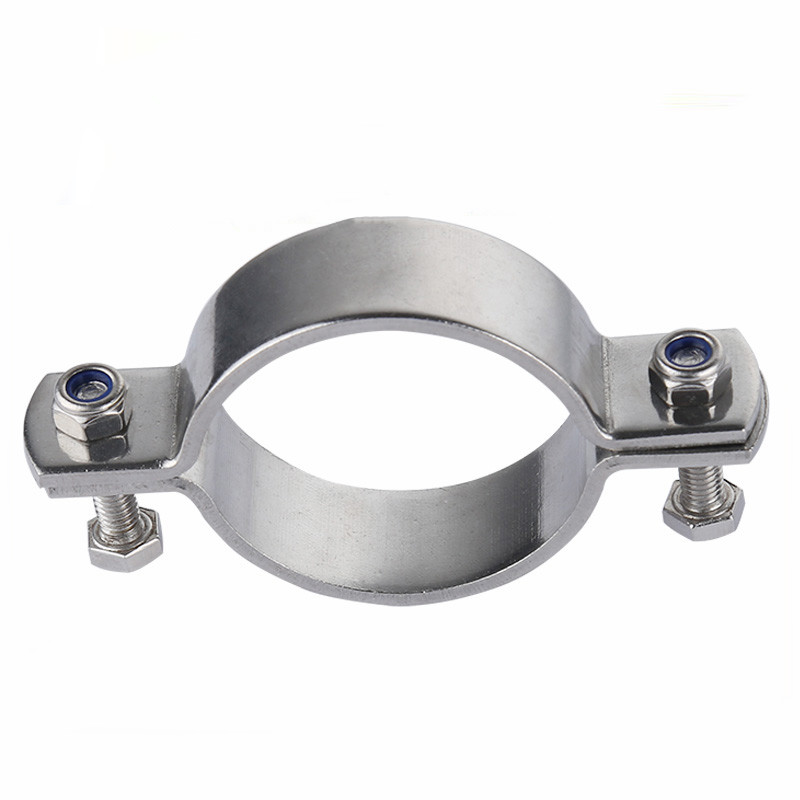
Core Mechanical Principle: Radial Clamping Force and Structural Anchoring
Curved Clamp Design and Bolt-Tightening Mechanics for Uniform Grip
Pole clamp systems stay stable because they have this curved shape that fits right around utility poles. When the bolts get tightened down, it creates good contact across the whole surface area and spreads out the pressure evenly. What happens next follows some basic cylinder stress rules - basically spreading out the pressure so there aren't any weak spots that might damage the pole itself. The bolts need to be just right too. If they're calibrated properly, they hold on tight without scratching up the pole surface. Tests published by experts show these clamps can hold about 15 to 30 percent more weight than those flat ones when given the same amount of tightening force. Bottom line? All that twisting motion from installation gets turned into solid, reliable support for the pole structure.
How Radial Clamping Force Prevents Slippage Under Static and Dynamic Loads
Radial clamping stops things from slipping thanks to two main factors working together: increased friction and an elastic grip effect. When dealing with steady weights like transformers sitting still, the radial pressure actually boosts the static friction coefficient somewhere between 0.2 and 0.4 compared to regular mounts that just rely on gravity. Things get interesting when there's movement involved though. Wind pushing up or vibrations shaking things around cause the clamp to deform slightly in a controlled way around its circumference, which fights against sideways sliding. Independent labs have tested these clamps extensively, showing they can handle shear forces well beyond 8 kilonewtons without moving an inch even when exposed to constant winds reaching about 95 kilometers per hour. The combination of sticky surfaces and springy compression makes these clamps work reliably whether facing heavy loads or tricky environmental conditions.
Load-Bearing Performance: Tensile, Shear, and Wind Resistance Validation
Comparative Load Thresholds: STP, PSC, and AB Pole Clamp Ratings
Pole clamp load capacity is verified using industry-standard tensile and shear testing protocols—STP (Standard Test Protocol), PSC (Pole Stability Certification), and AB (Anchoring Benchmark). Each defines maximum force thresholds before measurable deformation occurs:
| Rating System | Tensile Threshold (kN) | Shear Threshold (kN) |
|---|---|---|
| STP Class 4 | 18.7 | 12.3 |
| PSC Tier II | 22.1 | 15.8 |
| AB Gold | 27.5 | 19.4 |
AB Gold clamps withstand 47% more shear force than STP Class 4—critical given that material failures in utility infrastructure cost operators $740k annually (Ponemon Institute, 2023). Selecting clamps aligned with certified ratings directly mitigates premature failure risk.
Wind Uplift Testing at 120 km/h — Real-World Stability for 2.5m Antenna Mounts
Testing in wind tunnels at speeds around 120 km/h, which is similar to what we see in Category 1 hurricanes, shows how well these pole clamps hold up for telecom installations. When installed correctly with proper torque settings, the clamps didn't budge at all on 2.5 meter antenna mounts. There are three main reasons why they perform so well. First, the design includes radial compression that spreads out upward forces evenly across the mount. Second, the contact points have special serrations that stop tiny movements from happening. And third, the materials used resist corrosion, keeping their grip strength even after years of exposure. Looking at actual field conditions, these findings match what's needed for equipment facing wind pressures as high as roughly 1200 Newtons per square meter on surfaces that stick out into the elements.
Installation Integrity: Torque Control, Symmetry, and Compliance with IEEE Standards
Getting pole clamps installed correctly really comes down to three key things that just can't be ignored: making sure we apply the right amount of torque, keeping everything aligned properly, and following those IEEE standards religiously. The industry has pretty clear specs on torque levels. For example, steel clamps generally need between 50 and 60 Newton meters to compress them just enough without actually damaging the pole itself. When people place clamps asymmetrically, it creates all sorts of problems because the stress gets concentrated in weird spots, which makes the metal break down faster over time. On the flip side, when segments are positioned symmetrically, the weight gets distributed evenly across the whole structure. Sticking to IEEE Standard 80 for substation grounding safety and IEEE 1584 regarding arc flash hazards isn't just good practice either. These standards literally save lives in places where there's lots of fault current running through the system. A recent five year study looking at utility infrastructure revealed something pretty impressive. Installations that stuck strictly to these guidelines saw a massive drop in clamp related failures around 60% or so. That kind of discipline in installation definitely pays off in terms of keeping things working reliably for years to come.
Application-Specific Pole Clamp Selection Across Utility and Telecom Infrastructure
Matching Clamp Type to Equipment: Transformers, Antennas, Street Lights, and Solar Mounts
Getting the right pole clamp means looking at several factors including what kind of weight it needs to hold, how the equipment moves around, and what kind of weather conditions it faces daily. Transformers typically need really strong clamps, usually ones rated over 5000 pounds tension strength, because they deal with those annoying electromagnetic vibrations plus constant stress on bolts from all directions. For antennas mounted high up, adjustable angles matter a lot along with good shock absorption so signals stay aligned even when winds hit speeds past 120 kilometers per hour. Street lights often benefit most from galvanized steel clamps since regular paint just doesn't cut it against rust, especially near coastlines where salt air eats away at metals faster than anywhere else. When installing solar panels, designers should focus on mounts that handle expansion and contraction without losing their grip, particularly important in places where winter temperatures drop below freezing point. Poor quality solar clamps can lead to extra work for maintenance crews, sometimes adding around 40 percent more cost each year because panels keep shifting position season after season. That's why taking time to pick the proper clamp makes sense both financially and operationally for any type of outdoor installation.
FAQ
What is radial clamping force and how does it work?
Radial clamping force is a mechanism that prevents slippage by increasing friction and providing an elastic grip. It works effectively under both static and dynamic loads, helping the clamp to distribute pressure evenly and maintain its hold under challenging conditions.
What are the industry standards for pole clamp installation?
Industry standards, such as IEEE Standard 80 and IEEE 1584, dictate the correct torque levels, alignment procedures, and safety requirements for pole clamp installation. Adhering to these standards minimizes risk and failure rates.
Why are different pole clamps required for various equipment?
Different equipment, such as transformers, antennas, street lights, and solar mounts, have distinct requirements based on their weight, movement, and environmental exposure. Using specific pole clamps that cater to these needs ensures safety and optimal performance.
How does wind resistance impact pole clamp choice?
Clamps must withstand high wind pressures without shifting. Tests and materials that resist wind-induced movements ensure that pole clamps remain stable, particularly in regions prone to high winds or hurricanes.
Table of Contents
- Core Mechanical Principle: Radial Clamping Force and Structural Anchoring
- Load-Bearing Performance: Tensile, Shear, and Wind Resistance Validation
- Installation Integrity: Torque Control, Symmetry, and Compliance with IEEE Standards
- Application-Specific Pole Clamp Selection Across Utility and Telecom Infrastructure
- FAQ